Accused, shunned and exiled
The women banished to Ghana's 'witch camps'
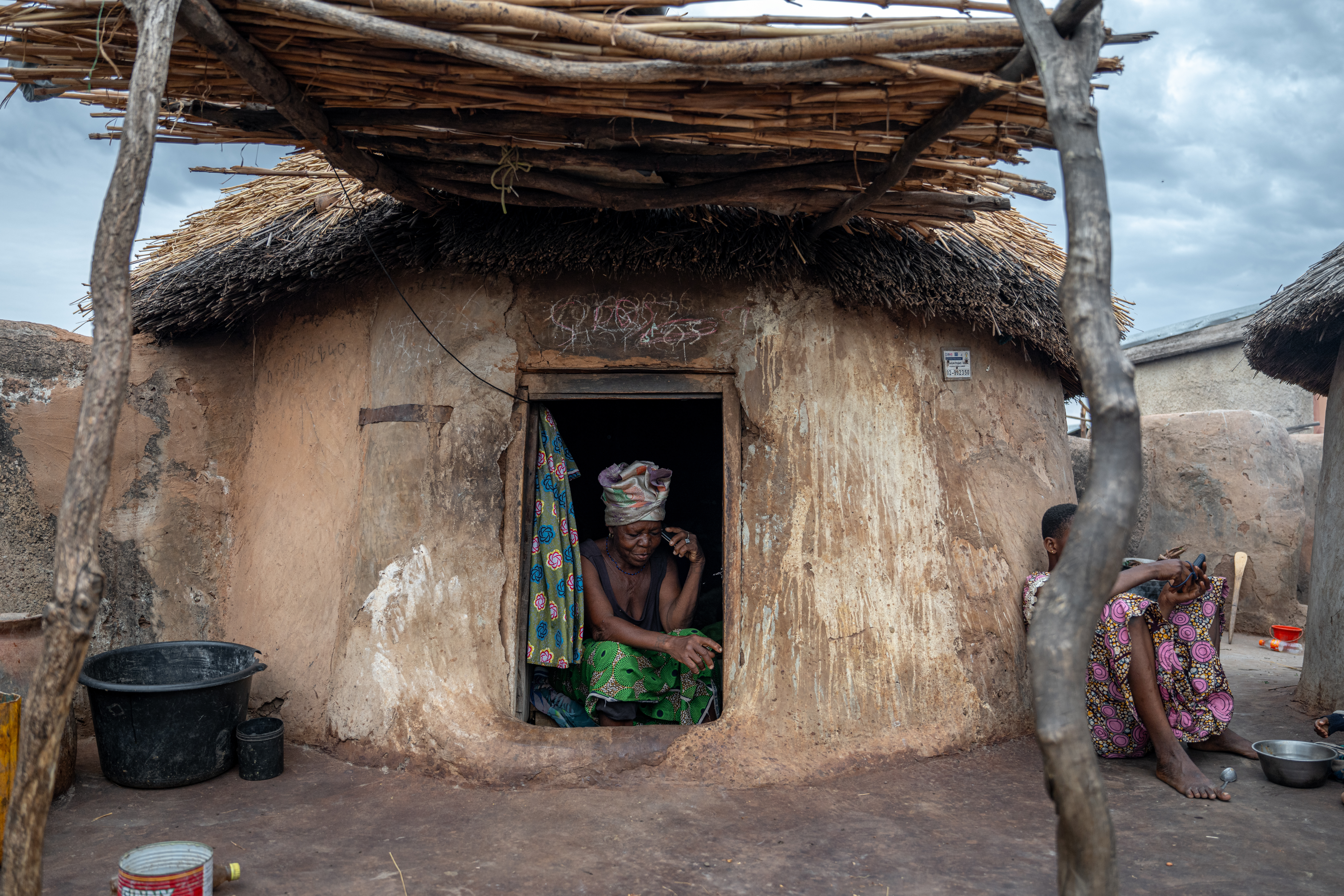


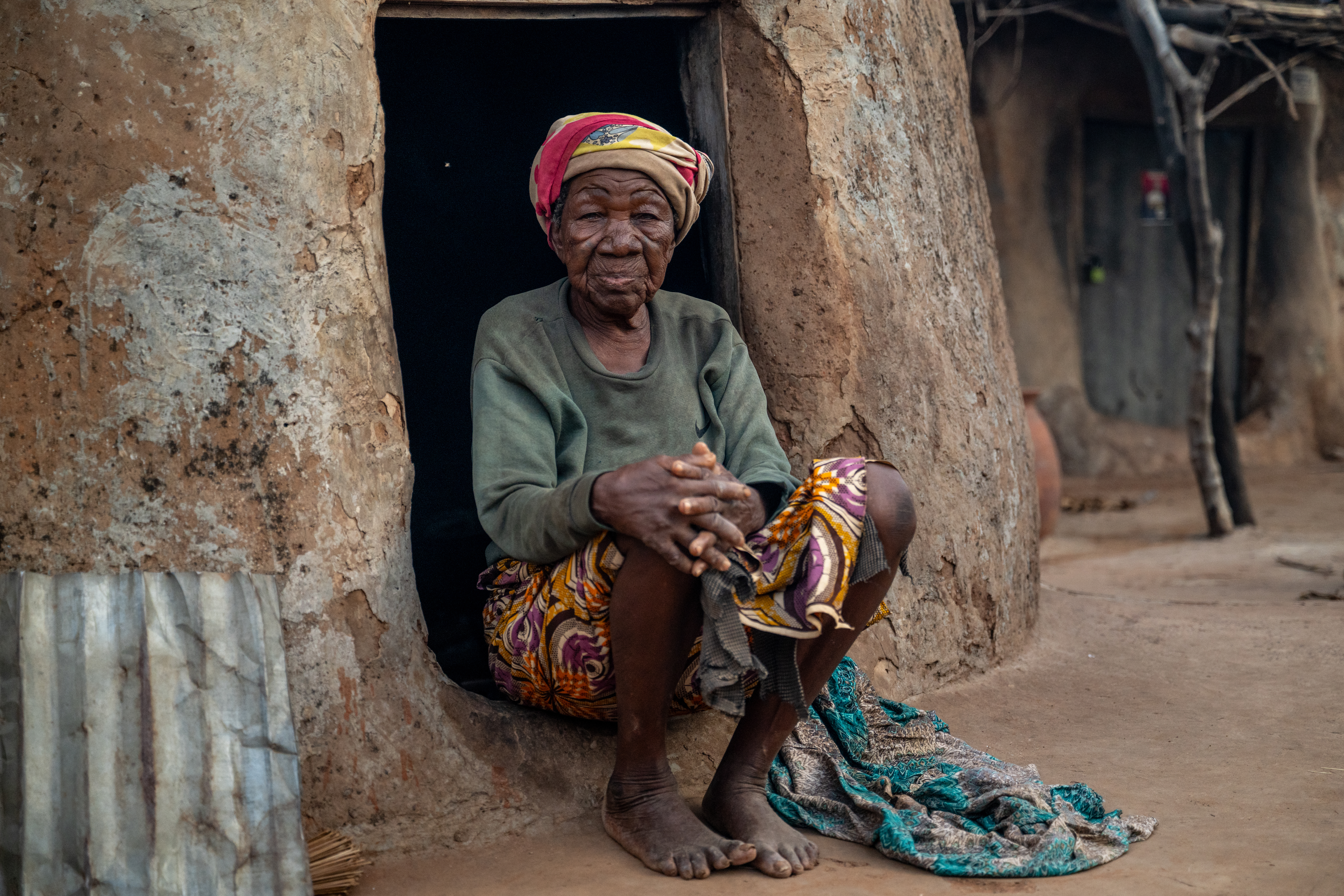
Gambaga, Ghana — Bachalibanoya Anaberi settles onto a small plastic stool in the doorway of her mud-brick hut. Her bare feet shift against the dirt floor as she adjusts her position. Her clothes are worn with dust and time.
At 85, she is the oldest resident of the Gambaga “witch camp” in Ghana’s North East Region, and one of the first to have been banished to this community of exiles.
“I’ve lived in this camp for 45 years,” says Anaberi. After her husband died, the children of his other wife accused her of witchcraft and blamed her for the family’s misfortune.
“She had no children of her own,” explains Reverend Gladys Lariba Mahama, a Presbyterian minister who has supported the women of Gambaga since 1997.
“Whenever a child of the co-wife fell sick, they [the family] attributed it to her. Later, she was accused of causing the death of one of them and was brought to Gambaga.”
Now Anaberi lives among some 80 other women, all cast out by their families under similar accusations.
In Gambaga, a cluster of mud huts with thatched roofs, daily life unfolds quietly. The women cook together, share chores, and look after one another's children, building small pockets of community - and solidarity.
The camp’s invisible walls offer fragile protection: safety from attacks by community members back home - yet no escape from the stigma of being branded a witch.

Driven out of their homes
Belief in witchcraft is deeply entrenched across Ghana, cutting through both rural and urban life, explains John Azumah, the director of the Sanneh Institute in Accra, a research centre, which has long supported survivors of witchcraft accusations and is part of a coalition pressing for legal and social reform.
“It’s not just a Ghanaian thing,” Azumah says. “Belief in the supernatural is so powerful in Africa. It’s very strong in Nigeria, in East Africa ... What is unique about Ghana is the camps in the north.”
Although accusations occur in other parts of Ghana, women in those areas are more likely to be ostracised than banished. Meanwhile, in the north, the accused are often sent to the “witch camps” that usually serve as their last refuge.
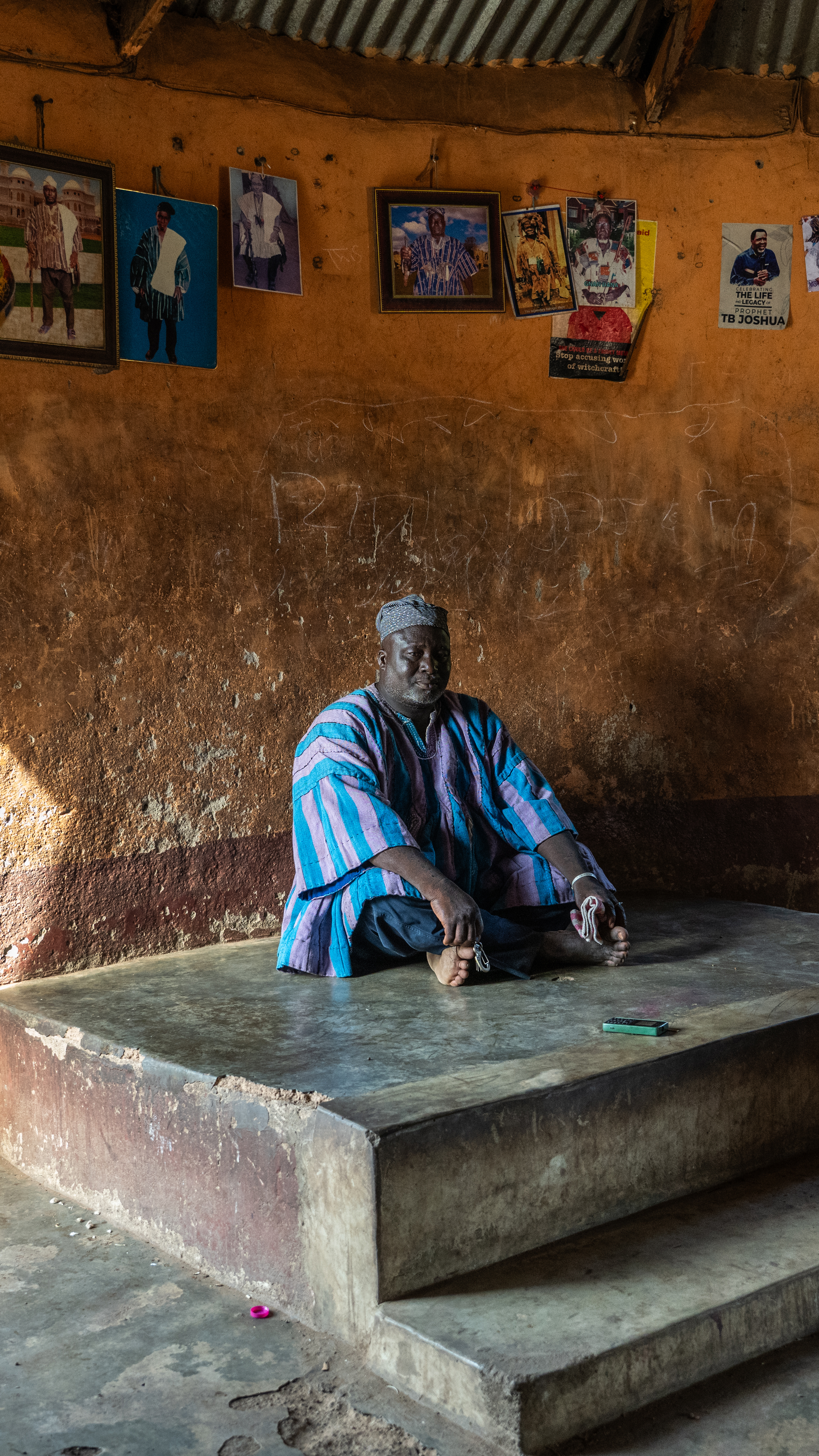
The camps are often located near or within villages and are overseen by traditional priests or camp chiefs, typically appointed by village leaders. The camp in Gambaga is the oldest and most well-known, but others exist in Kukuo, Gnani, and Kpatinga.
Women, often elderly, widowed, or without strong family protection, are most frequently targeted, Azumah says. Many, too, are “the poorest of the poor”, he added. Once accused, they are vulnerable to mob violence, abandonment, or lifelong banishment.
Sometimes, the accusations have deadly consequences. In July 2020, 90-year-old Akua Denteh was lynched in a public market after being accused. Her brutal killing shocked the nation, and sparked calls for reform.
“It is violence against women - a demonisation of women,” Azumah says, explaining how witchcraft is not always viewed as inherently evil. Women accused of witchcraft are feared and condemned, while men who are accused of it are thought to use it for protection or good, he explains.
Almost any misfortune can be interpreted as evidence of witchcraft, says Azumah. “Sometimes people are just accusing others maliciously, or to get them out of the way for some reason. It could be fights over property or farmland, or it could just be pure jealousy, like somebody's child is doing well in school.”
Once a woman is accused and sent to a camp, she may undergo a traditional "trial", involving the slaughter of a chicken or guinea fowl. "When the guinea fowl or chicken is dying, the position of the body determines the outcome [of the trial]," explains Alasan Shei, the traditional spiritual leader who oversees the Gnani camp. "If it falls on its back with the head facing up, it means the woman has some witchcraft. But if it lies face down, then she is innocent."
Yet even when this ritual “proves” innocence, returning home is rare. For most women, the accusation alone is enough to drive them from their communities.
“Most often, the communities where the women are accused will not be ready to accept them back,” says Shei.
Camps of exile
The Kpatinga camp, a small settlement of roughly 35 round huts, lies about a 15-minute drive from the main village. The huts have tin roofs, and some have light bulbs. About 40 women live there.
Kpatinga, like other “witch camps” in northern Ghana, emerged informally over time as a place for accused women to escape mob violence or targeted killing.
Camp chiefs, or caretakers, are responsible for protecting the women, but also wield influence in the settlements and are sometimes feared.
Though generally tolerated by local communities, the camps are not necessarily a sanctuary for the accused women. “The camps are neither a refuge nor a prison - they are something in between,” Azumah says.
Kpatinga is quieter and more isolated than other camps. Under the shade of a neem tree, 77-year-old camp chief Adam Musah watches as the women sitting beside him work. They crack groundnuts, their faces unsmiling and their mood subdued, their conversations kept to a minimum.
Away from the chief’s gaze, the women become less guarded. Their voices stay low, but they begin to speak cautiously, sharing their stories.
Among them is 68-year-old Abdulia Meili, who has lived in exile for nearly five years. A mother of eight, she was accused by her son after her brother was diagnosed with a stomach ulcer. She initially sought refuge at her father’s house, but her son kept coming there, accusing her of witchcraft. “I was crying,” she said. Eventually, her father told her she had to leave, which is when her son brought her to Kpatinga.
“My son regrets accusing me,” she says softly. “I’m not happy living here.” Meili says her son is now trying to bring her home, “but now my family will not accept me back.”


Like Meili and Anaberi, many women living in the camps were accused by those closest to them.
Others, though, have faced accusations from outsiders.
Fusheina Dokurugu, a widow and mother of five, has lived in exile for the past six years at the remote camp on the outskirts of Gnani village. Her husband died when their youngest child was five, then, after the sudden death of her nephew, she was accused of witchcraft by the village chief. Expelled immediately, Dokurugu now lives alone.
Dokurugu is quiet as she sits with the other women outside their huts. Some 130 people live at the camp. There is no farm, and the only opportunities to earn food or money are through informal jobs for local farmers. The women spend their days talking, resting, and passing the long hours together.
Inside her tiny, windowless hut surrounded by a grassy field, Dokurugu answers a phone call from her son, whom she has not seen in more than two years. He studies at a university in Tamale, about a three-hour drive away. The distance and the family’s limited resources make visits almost impossible.
Though she speaks to her children over the phone, the conversations do little to ease the pain of separation. “I’m not happy because my children are not with me,” she says. “I just want to go home.”
But returning is not an option - she fears the villagers would harm her.
While the camps have no fences or gates, most residents do not feel free to leave. Many of the women fear violence or believe that returning home would bring illness, misfortune, or even death, according to Azumah.
“There are no physical barriers keeping the women inside,” he says. “But cultural and psychological ones are deeply entrenched. They are made to believe that if they leave the camp, the spirits will kill them.”


Cut off from livelihoods
Life in the camps is sustained largely through subsistence farming and small-scale trading, with occasional support from NGOs and faith-based groups, which provide the women with food, healthcare, and, where possible, reintegration assistance.
One of the biggest challenges the women face in the camps is access to food, explains Lamnatu Adam, the executive director of Songtaba, a women’s rights advocacy organisation in northern Ghana. “The women usually run here, or are forced here,” she explains, “and once they arrive, they’re cut off from their livelihoods.”
Adam says most accused women are over the age of 60, and do not have children. But in some cases, women live at the camps with their children or grandchildren, who are also stigmatised. There is a belief “that witchcraft is transferable”, she explains.
These children become trapped in the same cycle of poverty and stigma, says Azumah.
Meanwhile, reports of women being exploited for labour and abused have surfaced over the years. As the camps are run informally, and women may depend on local farmers or community members for food, they are vulnerable to exploitation, Azumah explains.
“The abuse in the camps is too much,” he says, noting that there have been reports of unpaid labour, sexual exploitation and young girls being forced into marriage.


Hope for return
At Gambaga, Reverend Mahama moves easily through the camp, greeting women by name and exchanging warm smiles. “We are here every morning,” she explains, as an elderly woman approaches with a gentle smile and a handshake. A group of women pumping water pauses to greet the reverend.
Unlike other camps where tension is palpable between the women and camp caretakers, Gambaga seems to offer a more hopeful example.
Gambaga’s central location - at the heart of the village rather than tucked away - also means there’s a greater degree of acceptance from the community. It also makes it easier for family members to visit, if they wish to.
"Life in Gambaga here is not easy," says Mahama. "The home here, we will not say is the best, but it's somehow better, because whenever a woman is brought here, the kind of torture that the woman has gone through, and the pain that they go through, they weep all week.”
She says her church provides counseling services to help the women process their trauma. The classes and events they organise, which often include singing and dancing, also offer moments of relief.
In some instances, the Presbyterian Church and NGOs are also actively supporting reintegration.
“We’re working hard on the reintegration programme,” Mahama says. “Now, some women travel home to visit and return. Some of their family members even come here to see them.”
For others, families refuse to visit, or returning home is not an option they would consider. “Sometimes, because of the humiliation and trauma they’ve endured, when you ask if they want to go home, some will say, ‘No,’” Mahama says.
But there are stories of return, giving some hope.

For Ama Somani, a mother of eight in her 50s, reintegration brought a new chance at life.
“I wanted death because it was too painful,” she says of the years she was separated from her family. Somani was known as hardworking in her village, but after a niece blamed her for a mysterious illness, she was subjected to a traditional ritual that declared her “guilty” of witchcraft. With no one to defend her and her now estranged husband unwilling to support her, she spent four years isolated in Gambaga. Throughout this period, her children would visit her several times a month.
In April this year, with her children pushing for her return and church members and local rights advocates mediating and providing financial support, she was finally able to move to a nearby village where she has extended family.
Life remains difficult, she says, but she is overjoyed to be reunited with her children and dreams of starting a soap-making business - a skill she learned in Gambaga.
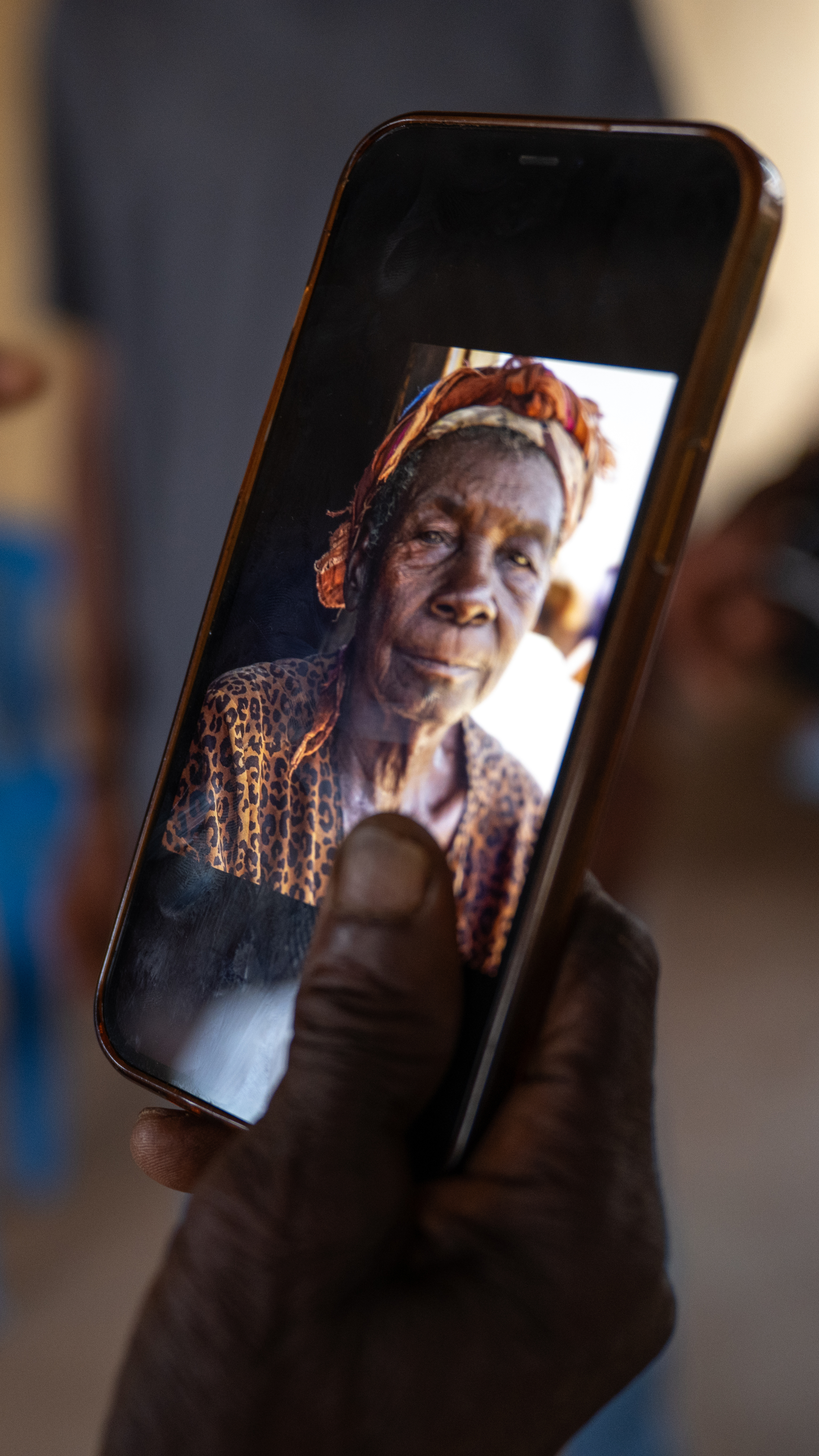
Akolopoka, another former Gambaga resident, was also reintegrated into her home community with the help of local advocates. She lived out her final years back with her family before passing away last year.
When her photograph was shown to women in Gambaga, they smiled and remembered her fondly as a hard worker - hauling water, gathering wood, and carrying out the daily tasks that once defined her life in exile.
Stories like theirs are rare, but carry immense weight - reminding the women that returning home is possible.


‘Once a witch, forever a witch’
Reintegration, however, is often costly and fraught. First, the family and community must agree to accept the woman back - a step that is rare.
Then, if they agree, the woman must undergo a traditional ritual performed by a local priest to “absolve” her of alleged powers. This involves an animal sacrifice and a fee paid to the priest, often more than 1,000 Ghanaian cedis (about $90). There are women who may safely return, but simply don’t have the money to do so, explains Azumah.
Sometimes, NGOs may help with this cost, but after the ritual is performed, the family and community still refuse to accept the woman back.
“Most of the communities don’t believe in the exorcism,” says Azumah, referring to the rituals. “Because once a witch, forever a witch. They believe in the diagnosis, but not the cure.”
However, efforts to break this cycle are growing.
Mahama’s church helped five women return to their communities this year, while NGOs and women's rights organisations have helped hundreds of women over the past 15 years.


A fight for change
In March 2025, Ghana’s Parliament reintroduced the Anti-Witchcraft Bill. If passed, it would criminalise witchcraft accusations and empower police and social workers to intervene. It also lays the groundwork for reintegration programmes to support survivors returning to society.
The bill had previously passed Parliament in 2023, but Ghana’s former president refused to sign it into law.
Campaigners describe it as a decisive opportunity for change.
But beyond the law, challenges remain.
Belief in witchcraft is deeply ingrained, and stigma is not easily erased by legislation. Police resources in rural areas are also limited, and women who have already been banished face an uncertain future. Even if the law is enforced, many of the accused wonder where they would go.
In the camps, women are slowly trying to advocate for change and an end to stigma. During a Mother’s Day gathering in May, organised by Songtaba at the Gnani camp, a woman held up a sign, reading, “Being old is not a crime - stop targeting elderly women!”
Meanwhile, back in Gambaga, the camp’s oldest resident, Anaberi, has been struggling with mental health challenges since 2010, Mahama says.
She received hospital care and medicine and is doing better. Still, she rarely speaks as she quietly shuffles around the settlement.
As Ghana seeks to introduce legislation to ban witchcraft accusations, most banished women continue their lives of quiet resilience.
Even if change does come, it may not come soon enough for Anaberi. After more than four decades of exile, the octogenarian will likely live out the rest of her days in her hut at the edge of Gambaga.
This story was supported by the Pulitzer Center.

