Skip linksSkip to Content
Inside nepals busiest leprosy hospital - Latest News & Updates
Live
Navigation menu
  • News
    • Africa
    • Asia
    • US & Canada
    • Latin America
    • Europe
    • Asia Pacific
  • Middle East
  • Explained
  • Opinion
  • Sport
  • Video
    • Features
    • Economy
    • Human Rights
    • Climate Crisis
    • Investigations
    • Interactives
    • In Pictures
    • Science & Technology
    • Podcasts
    • Travel
play
Live

In Pictures

Gallery|Poverty and Development

Inside Nepal’s busiest leprosy hospital

The Lalgadh clinic aims to treat, rehabilitate and provide psychological counselling, but patients often come too late.


LEPROSY, Nepal/ Please Do Not Use
Nepal's Lalgadh leprosy hospital is 193km southeast of the capital, Kathmandu. It was built in 1993 on the site of a former Nepalese military training ground. [Martin Zinggl/Al Jazeera]

By Martin Zinggl

Published On 21 Feb 201621 Feb 2016

Share

facebooktwitterwhatsappcopylink

Save

Lalgadh, Nepal – The Lalgadh Leprosy Hospital in Nepal is considered one of the busiest in the world, with more than 1,200 new patients each year.

Founded by a British nurse, Eileen Lodge, in 1993, the hospital originally had just three staff members. Now the medical team is 34-people strong.

Each year, about 250,000 people are infected with leprosy worldwide. Although Nepal’s government announced that leprosy had been eliminated in the country in 2009 – based on the World Health Organization’s measurement of less than one case per 10,000 members of the population – that does not mean it has been eradicated. In fact, leprosy is endemic in some parts of the Himalayan country.

Despite the very low risk of infection, the stigma surrounding the disease can be extreme in Nepal. Patients are often isolated and abandoned by their families and communities in a country where the law prohibits infected people from working or marrying. In some rural areas, the disease is considered a curse from God as a punishment for sins committed in a former life.

LEPROSY, Nepal/ Please Do Not Use
The clinic was erected in the middle of a jungle, meaning that poisonous snakes, spiders and scorpions posed a potential threat to patients. These may have been largely eradicated, but malaria continues to kill people living in and around Lalgadh. [Martin Zinggl/Al Jazeera]
Advertisement
LEPROSY, Nepal/ Please Do Not Use
Dr Krishna is the head of the medical staff at Lalgadh and has been working at the hospital since it opened in 1993. It is work that carries deep personal significance for him. His grandparents and mother suffer from leprosy, and he was born and raised in a leprosy colony near Kathmandu. Today, he is an expert on the disease, having dedicated his life to helping the afflicted. 'I wish to ban leprosy out of Nepal, but I know I will not live to see that happening,' he says.[Martin Zinggl/Al Jazeera]
LEPROSY, Nepal/ Please Do Not Use
Since it had opened, more than 32,000 leprosy patients have been treated at Lalgadh free of charge. However, Dr Krishna says, 'We hardly know anything about this mysterious disease.' [Martin Zinggl/Al Jazeera]
LEPROSY, Nepal/ Please Do Not Use
Leprosy does not discriminate based on gender or age, but it does seem to target the poorest of people. Harsh working and living conditions, poor water supplies and malnutrition can lead to a weakened immune system, allowing the bacteria to enter the body and spread. Dr Krishna says: 'As long as poverty is not fought in this world, leprosy will continue.' [Martin Zinggl/Al Jazeera]
LEPROSY, Nepal/ Please Do Not Use
If a patient is treated within six months of the first symptoms appearing, the commonly seen 'claw hands' can be avoided. These deformations of phalanges and joints are a result of the nerves in the toes and fingers dying. [Martin Zinggl/Al Jazeera]
LEPROSY, Nepal/ Please Do Not Use
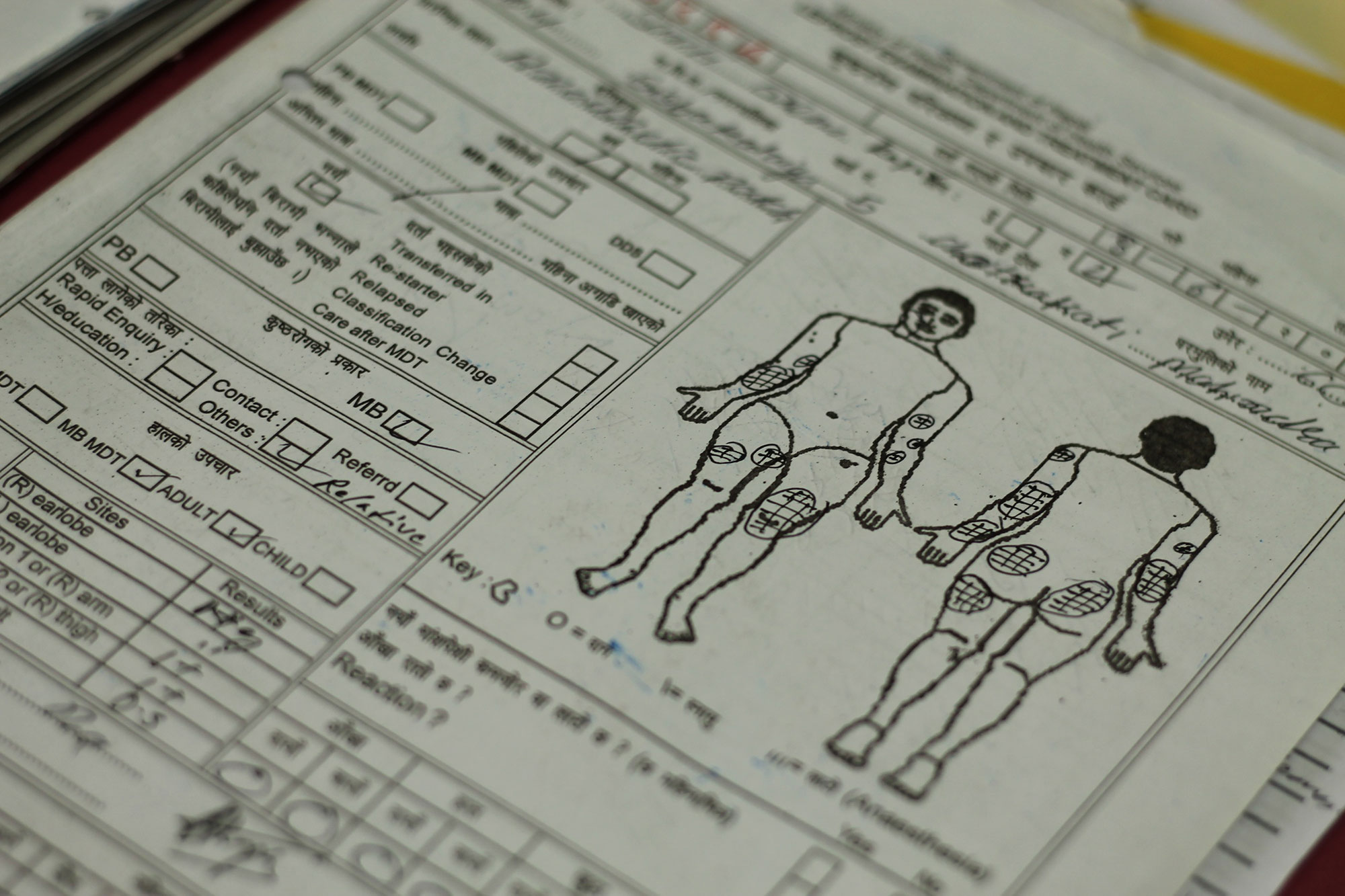
Generally, it takes between two and 20 years after exposure to leprosy for the symptoms to appear - often in the form of nerve damage in the toes, fingers, nose or eyelids. Numbness in these body parts means that wounds often go unnoticed and can become infected. [Martin Zinggl/Al Jazeera]
Advertisement
LEPROSY, Nepal/ Please Do Not Use
As a result of the stigmatisation and isolation they often face, many patients suffer from depression. Some become suicidal. At Lalgadh, psychological counselling is an important part of the treatment patients receive. [Martin Zinggl/Al Jazeera]
LEPROSY, Nepal/ Please Do Not Use
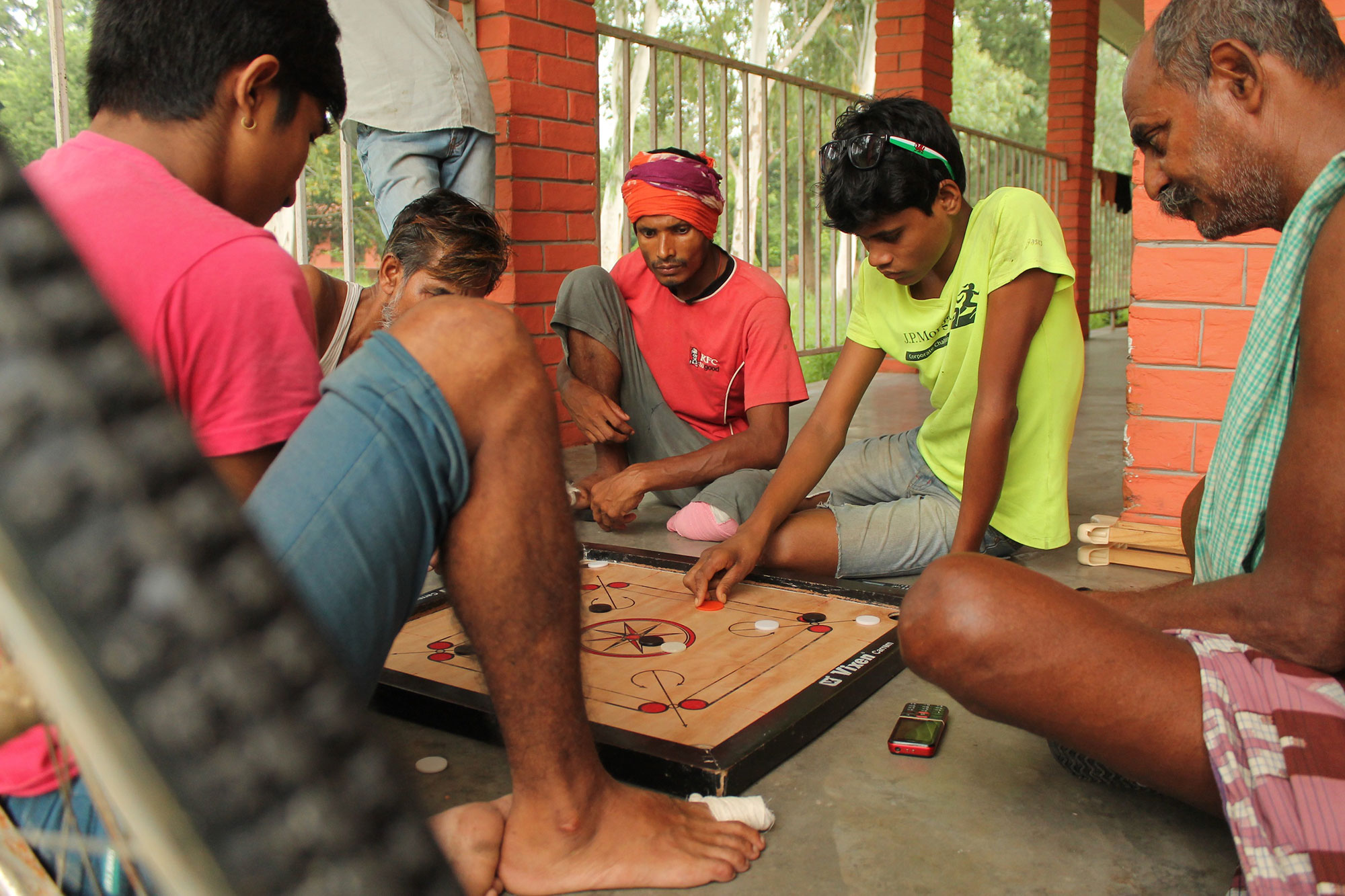
Patients talk and play cards and board games with each other. The bonds they develop can help counter the effects of their isolation, providing them with moments of happiness and mutual understanding. [Martin Zinggl/Al Jazeera]
LEPROSY, Nepal/ Please Do Not Use
Many patients stay at the hospital for a couple of days and up to two years, depending on the severity of their case. But some stay for ever, preferring not to return home to families and communities were they have been stigmatised and isolated. They work In the hospital as waiters in the canteen, or in the workshop that produces special shoes for leprosy patients. [Martin Zinggl/Al Jazeera]
LEPROSY, Nepal/ Please Do Not Use
Special shoes for patients without toes are made in Lalgadh's footwear workshop, which is operated by former patients. [Martin Zinggl/Al Jazeera]
LEPROSY, Nepal/ Please Do Not Use
Often, by the time a patient reaches the hospital, it is too late and infected body parts need to be amputated. Chandre Shor went to Lalgadh when there were maggots in his wounds and friends complained about the smell. He waited so long, he said, because he was scared of being diagnosed with leprosy and suffering further stigmatisation as a result. Shor died as a result of a blood infection two days after this picture was taken. [Martin Zinggl/Al Jazeera]
LEPROSY, Nepal/ Please Do Not Use
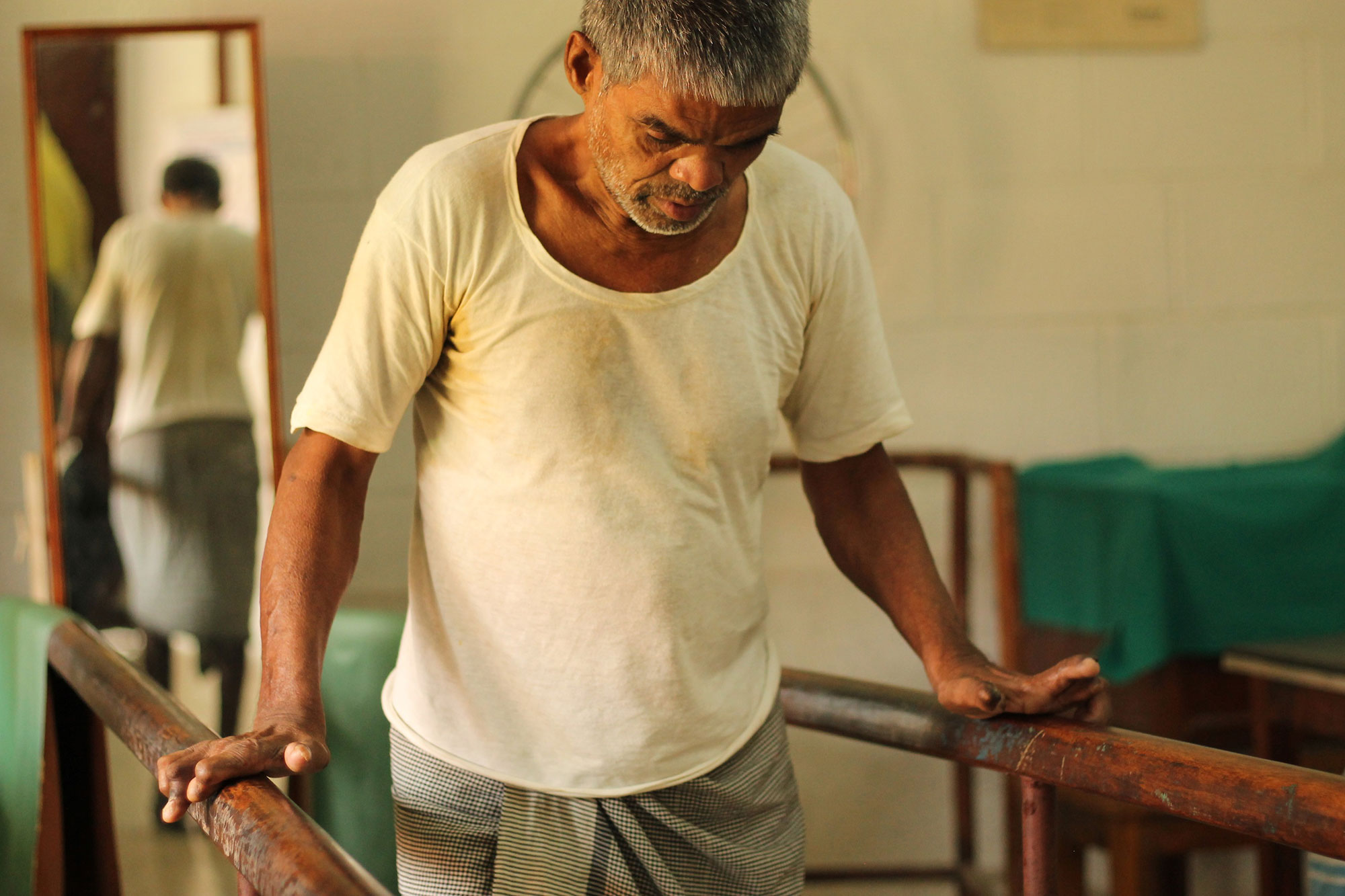
Physiotherapy is key for the patients. The day after his surgery, Shree Lal, who lost a toe, is learning to walk again with the aid of rehabilitation bars in Lalgadh's physiotherapy station. Often, the patients end up in wheelchairs or having to use walking sticks. [Martin Zinggl/Al Jazeera]
LEPROSY, Nepal/ Please Do Not Use
Leprosy can be treated with medication. But the physical and psychological consequences last a lifetime, sometimes drastically minimising the patients' quality of life. [Martin Zinggl/Al Jazeera]

Related

  • ‘The homeland is the homeland’: Venezuelans brace for possible US attack

    Residents of Caracas go about their routines amid growing anxiety over the deployment of US military assets offshore.

    Published On 5 Dec 20255 Dec 2025
    People walk past a bus with pictures of Venezuelan President Nicolas Maduro and Venezuela's late President Hugo Chavez
  • AI threatens to widen inequality among states: UN

    Report warns of potential ‘great divergence’, with developed states profiting and others left behind.

    Published On 2 Dec 20252 Dec 2025
    AI
  • Pope Leo urges unity on day two of Lebanon visit

    Martyrs’ Square became the symbolic backdrop for interfaith solidarity amid the country’s political paralysis.

    Published On 1 Dec 20251 Dec 2025
    Pope Leo XIV waves as he arrives for a visit to Bkerki, the seat of the Maronite Church, in Lebanon, Monday, Dec. 1, 2025. (AP Photo/Bilal Hussein)
  • Hong Kong fire that killed at least 94 ‘under control’ but hundreds missing

    Death toll rises to 94 as rescuers try to reach people trapped in upper apartments of high rises.

    Published On 27 Nov 202527 Nov 2025
    Secondary school students watch the aftermath of the major fire at Wang Fuk Court housing estate, in Tai Po, Hong Kong, China, November 27, 2025. REUTERS/Tyrone Siu

More from Gallery

  • Survivors recall terror of landslides from North Sumatra cyclone

    Many survivors are looking for their missing loved ones. Some were carried away by floodwaters, others buried under the mud.
    This gallery article has 14 imagescamera14
  • Photos: Gaza university resumes in-person classes

    Gaza University
    This gallery article has 7 imagescamera7
  • Photos: Pope prays at site of 2020 Beirut port explosion

    Pope Leo XIV visit to Lebanon
    This gallery article has 7 imagescamera7
  • Photos: Recovery under way after floods in Indonesia, Sri Lanka, Thailand

    Rescuers move people to safety on a small boat in a flooded area.
    This gallery article has 8 imagescamera8

Most popular

  • Infantino’s ‘Peace Prize’ to Trump raises questions about FIFA’s neutrality

    Trump and Infantino
  • ‘Uninterrupted oil shipments’: Key takeaways from Putin-Modi talks in Delhi

    Russia's President Vladimir Putin and India's Prime Minister Narendra Modi are seen after their talks at Hyderabad House in New Delhi on December 5, 2025 [Alexander Kazakov/Sputnik/Pool via AFP]
  • FIFA World Cup 2026 draw – updates

    A picture shows groups A, B, C, D, E, F, G, H, I, J, K and L during the draw for the 2026 FIFA Football World Cup taking place in the US, Canada and Mexico, at the Kennedy Center, in Washington, DC, on December 5, 2025. (Photo by Mandel NGAN / POOL / AFP)
  • Arab, Muslim nations reject Israel exit-only plan for Gaza Rafah crossing

    Rafah crossing, Gaza

  • About

    • About Us
    • Code of Ethics
    • Terms and Conditions
    • EU/EEA Regulatory Notice
    • Privacy Policy
    • Cookie Policy
    • Cookie Preferences
    • Accessibility Statement
    • Sitemap
    • Work for us
  • Connect

    • Contact Us
    • User Accounts Help
    • Advertise with us
    • Stay Connected
    • Newsletters
    • Channel Finder
    • TV Schedule
    • Podcasts
    • Submit a Tip
    • Paid Partner Content
  • Our Channels

    • Al Jazeera Arabic
    • Al Jazeera English
    • Al Jazeera Investigative Unit
    • Al Jazeera Mubasher
    • Al Jazeera Documentary
    • Al Jazeera Balkans
    • AJ+
  • Our Network

    • Al Jazeera Centre for Studies
    • Al Jazeera Media Institute
    • Learn Arabic
    • Al Jazeera Centre for Public Liberties & Human Rights
    • Al Jazeera Forum
    • Al Jazeera Hotel Partners

Follow Al Jazeera English:

  • facebook
  • twitter
  • youtube
  • instagram-colored-outline
  • rss
Al Jazeera Media Network logo
© 2025 Al Jazeera Media Network