Skip linksSkip to Content
Madagascar on the hunt for sharks - Latest News & Updates
Live
Navigation menu
  • News
    • Africa
    • Asia
    • US & Canada
    • Latin America
    • Europe
    • Asia Pacific
  • Middle East
  • Explained
  • Opinion
  • Sport
  • Video
    • Features
    • Economy
    • Human Rights
    • Climate Crisis
    • Investigations
    • Interactives
    • In Pictures
    • Science & Technology
    • Podcasts
    • Travel
play
Live

In Pictures

Gallery

Madagascar: On the hunt for sharks

As fisheries collapse due to overfishing and climate change, Madagascar fishermen migrate further out to find fish.
Fishing on the Edge/ Please Do Not Use
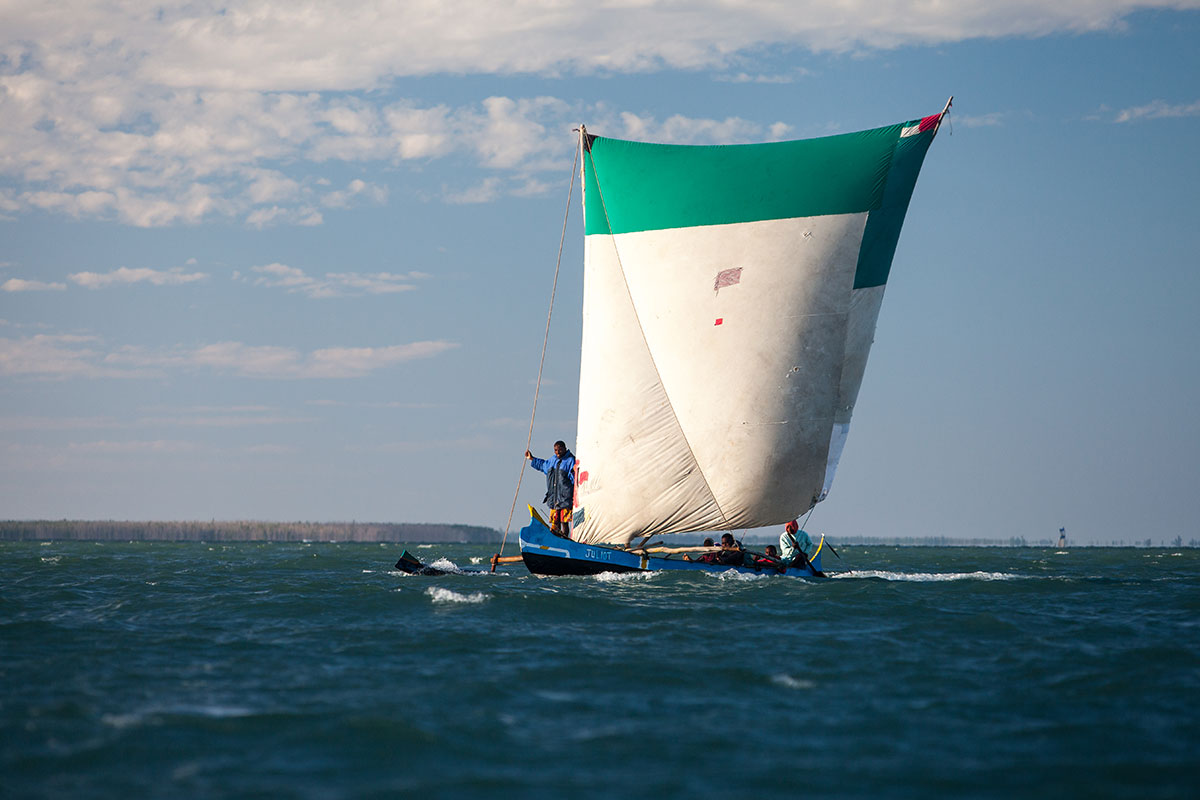
Over the past 15 years, Vezo fishermen have been travelling longer distances to seek out productive fishing grounds. Taking only their fishing gear, cooking utensils and a few possessions, they sail northwards once the cyclone season ends and sea conditions are good. Often they sail at night, far offshore to catch favourable winds, cooking and sleeping in their pirogues. [Garth Cripps/Al Jazeera]

By Garth Cripps

Published On 8 Jun 20168 Jun 2016

Share

facebooktwitterwhatsappcopylink

Save

Mozambique Channel, Madagascar – Driven by the collapse of local fisheries, increasing weather extremes and poverty, as well as the opportunity to earn money by selling shark fins and sea cucumbers to the Chinese market, the fishermen of southwest Madagascar have been leaving their homes in increasing numbers and migrating greater distances to places where they can still find productive fishing grounds.

In the year 2015, natural disasters displaced nearly 19.2 million people, more than twice the number who became refugees due to conflicts and wars.

An increasing number of people are forced from their homes by environmental change – drought, cyclones, rising sea levels and collapsing natural environments that can no longer sustain them. By 2050 they will number anything from 50 million to 200 million because of global climate change.

The fishermen travel to the most remote parts of Madagascar’s west coast. Often living far offshore on tiny islands in the Mozambique Channel, they eke out a living in places with no potable water or food and no access to hospitals or schools.

READ MORE: The endangered lifeline of Madagascar’s sharks

Even in these remote seas, industrial, big-scale fishing undermines the marine ecosystem.  And although they have fished in the waters for generations, the fishermen of Madagascar have no formal claim to the seas they depend on for a livelihood. The establishment of protected marine areas further close off vital fishing grounds to them.

Blue Ventures, a marine conservation NGO, and the traditional fishermen are working with the Madagascar government to create a network of community-managed marine areas.  By giving traditional fishermen management rights over their fisheries and protecting them from over-exploitation by outsiders, they hope to restore the fisheries.

Advertisement
Fishing on the Edge/ Please Do Not Use
A shoal of fusilier fish caught in the gill net of a fisherman. The net covers a reef once dominated by living coral, but now overgrown with algae. Overfishing, exacerbated by the negative effects of climate change and ocean acidification, which are beginning to be felt here, have led to extensive degradation of coral reefs, causing the collapse of fisheries they once supported. [Garth Cripps/Al Jazeera]
Advertisement
Fishing on the Edge/ Please Do Not Use
Women dig away sand that had started to cover a well, blown by relentless winds. Climate change is predicted to increase the intensity of cyclones in this region, making rainfall more erratic and drought more severe in the south of Madagascar. [Garth Cripps/Al Jazeera]
Fishing on the Edge/ Please Do Not Use
Francois, in his 60s, has been fishing for sharks for 30 years. He says that 15 years ago he was catching adult sharks - tiger, hammerhead and 5-metre great whites - too large to pull into his pirogue, but now he mainly catches small, immature sharks. Overfishing, driven by strong Chinese demand for shark fins, has led to the collapse of local shark populations. Over the past decade, he has been forced to go further from his home to find sharks.[Garth Cripps/Al Jazeera]
Fishing on the Edge/ Please Do Not Use
During their annual migration north, the fishing families journey from the sheltered beaches of southwest Madagascar across exposed seas and along a coastline where the breaking surf makes it difficult to land their sailing canoes. [Garth Cripps/Al Jazeera]
Fishing on the Edge/ Please Do Not Use
As dawn breaks, two Vezo boys man the sails and rudder of their family's pirogue. While migration allows the families to meet their immediate sustenance needs, it locks their children into a cycle of dependence as they are unable to pursue an education. But many youngsters prefer to learn how to fish and sail. They say that even with a formal education there are no jobs for them, so they are better off learning how to survive from the sea. [Garth Cripps/Al Jazeera]
Fishing on the Edge/ Please Do Not Use
The family of fishermen from southwest Madagascar makes their annual 600km trip north of their home. Strong southwesterly winds from the Antarctic drive them north. They use knowledge of the coast, winds and currents to navigate - often beyond the sight of land and at night. [Garth Cripps/Al Jazeera]
Advertisement
Fishing on the Edge/ Please Do Not Use
Fishermen camp on a sandbar in the Barren Isles, in western Madagascar. The fishing families live here for as long as the weather permits, leaving only during the cyclone season. They free dive for sea cucumbers and fish for sharks on the reefs farther out into the Mozambique Chanel. It is only in remote areas such as this that fishermen can still find sea cucumbers and catch large sharks. [Garth Cripps/ Al Jazeera]
Fishing on the Edge/ Please Do Not Use
Migrant Vezo fishermen set up a camp on a remote sandbank, 25km offshore in the Barren Isles, west Madagascar. The cay is little more than 200m long, and will become inundated during the next spring tide. The fishermen will stay here as long as the weather permits, only returning to the mainland for water and provisions. Far offshore they occasionally cross foreign industrial longliners. Illegal, industrial-scale teams use scuba to dive for sea cucumber and have stripped the reefs where Vezo free-dive. [Garth Cripps/Al Jazeera]
Fishing on the Edge/ Please Do Not Use
As the sun rises, Vezo fishermen sail from the tiny island they live on far out into the Mozambique channel. If the winds are good, the fishermen rise at 3am so that they can catch the favourable winds before dawn; they sail 20km-60km out into the channel and spend the day free-diving and checking their shark nets; then sail back in the afternoon. [Garth Cripps/Al Jazeera]
Fishing on the Edge/ Please Do Not Use
A migrant fisherman free-diving for sea cucumbers on a rocky reef, west of the Barren Isles, Madagascar. Even in faraway fisheries, they are struggling to find adult sea cucumbers. They carry long spears to add2 metres or so to the depth they can exploit. For them, the effort is worth it: Chinese middlemen will pay them up to $20-$30 for certain species. [Garth Cripps/Al Jazeera]
Fishing on the Edge/ Please Do Not Use
A fisherman harvested sea cucumber by free-diving. Illegal sea cucumber diving teams using scuba gear have exploited the deeper areas. Migrant fishermen must free dive up to 18-24 metres to find sea cucumbers, sometimes on the same reefs illegal scuba divers are exploiting. [Garth Cripps/Al Jazeera]
Fishing on the Edge/ Please Do Not Use
Shark fishing was recorded in Madagascar a century ago; but it was only in the early 1990s that traditional fishermen started targeting sharks intensively. Increasing Chinese affluence drove the value of shark fins up, making shark fishing lucrative. The fishermen continue to catch shark despite falling shark fin prices, while also eating the meat and using the liver oil for cooking. [Garth Cripps/Al Jazeera]
Fishing on the Edge/ Please Do Not Use
An illegal sea cucumber diver using scuba gear scans the seabed. Using scuba to catch for sea cucumbers is illegal in Madagascar, but very lucrative. Illegal operators from the major ports use converted industrial trawlers or 50-tonne wooden sailing boats, backed up by motorised skiffs, to carry out industrial-scale dive operations. [Garth Cripps/Al Jazeera]
Fishing on the Edge/ Please Do Not Use
On a sand cay 30 km offshore in the Barren Isles, fishermen salt sea cucumbers. These sea cucumbers were harvested by scuba divers at 35 - 45 metres deep. Scuba diving for sea cucumbers is illegal in Madagascar and also extremely dangerous, with untrained divers using rusty old equipment and diving 6 to 8 times a day to depths greater than 35 metres. They dive alone and many fear of being lost at sea. [Garth Cripps/Al Jazeera]
Fishing on the Edge/ Please Do Not Use
In a timeless custom, fishermen help each other to pull a sailing canoe up from the surf on to the sandbar they are inhabiting. In the remote islands, there is a strong sense of community among the fishermen. The government of Madagascar and Blue Ventures, a marine conservation NGO, are working with traditional fishermen to create a community-managed marine protected area. By giving small-scale fishermen strong management rights, they hope fisheries will recover and even become profitable again. [Garth Cripps/Al Jazeera]

More from Gallery

  • Survivors recall terror of landslides from North Sumatra cyclone

    Many survivors are looking for their missing loved ones. Some were carried away by floodwaters, others buried under the mud.
    This gallery article has 14 imagescamera14
  • Photos: Gaza university resumes in-person classes

    Gaza University
    This gallery article has 7 imagescamera7
  • Photos: Pope prays at site of 2020 Beirut port explosion

    Pope Leo XIV visit to Lebanon
    This gallery article has 7 imagescamera7
  • Photos: Recovery under way after floods in Indonesia, Sri Lanka, Thailand

    Rescuers move people to safety on a small boat in a flooded area.
    This gallery article has 8 imagescamera8

Most popular

  • ‘Uninterrupted oil shipments’: Key takeaways from Putin-Modi talks in Delhi

    Russia's President Vladimir Putin and India's Prime Minister Narendra Modi are seen after their talks at Hyderabad House in New Delhi on December 5, 2025 [Alexander Kazakov/Sputnik/Pool via AFP]
  • Infantino’s ‘Peace Prize’ to Trump raises questions about FIFA’s neutrality

    Trump and Infantino
  • FIFA World Cup 2026 draw – updates

    A picture shows groups A, B, C, D, E, F, G, H, I, J, K and L during the draw for the 2026 FIFA Football World Cup taking place in the US, Canada and Mexico, at the Kennedy Center, in Washington, DC, on December 5, 2025. (Photo by Mandel NGAN / POOL / AFP)
  • MF Husain was forced into exile; now his work finds permanent home in Qatar

    A picture of MF Husain at Lawh Wa Qalam: M. F. Husain Museum, Doha, Qatar.

  • About

    • About Us
    • Code of Ethics
    • Terms and Conditions
    • EU/EEA Regulatory Notice
    • Privacy Policy
    • Cookie Policy
    • Cookie Preferences
    • Accessibility Statement
    • Sitemap
    • Work for us
  • Connect

    • Contact Us
    • User Accounts Help
    • Advertise with us
    • Stay Connected
    • Newsletters
    • Channel Finder
    • TV Schedule
    • Podcasts
    • Submit a Tip
    • Paid Partner Content
  • Our Channels

    • Al Jazeera Arabic
    • Al Jazeera English
    • Al Jazeera Investigative Unit
    • Al Jazeera Mubasher
    • Al Jazeera Documentary
    • Al Jazeera Balkans
    • AJ+
  • Our Network

    • Al Jazeera Centre for Studies
    • Al Jazeera Media Institute
    • Learn Arabic
    • Al Jazeera Centre for Public Liberties & Human Rights
    • Al Jazeera Forum
    • Al Jazeera Hotel Partners

Follow Al Jazeera English:

  • facebook
  • twitter
  • youtube
  • instagram-colored-outline
  • rss
Al Jazeera Media Network logo
© 2025 Al Jazeera Media Network