Skip linksSkip to Content
Photosgaps in financing women led businesses in northern nigeria - Latest News & Updates
Live
Navigation menu
  • News
    • Africa
    • Asia
    • US & Canada
    • Latin America
    • Europe
    • Asia Pacific
  • Middle East
  • Explained
  • Opinion
  • Sport
  • Video
    • Features
    • Economy
    • Human Rights
    • Climate Crisis
    • Investigations
    • Interactives
    • In Pictures
    • Science & Technology
    • Podcasts
    • Travel
play
Live

In Pictures

Gallery

Photos: Women-led businesses in north Nigeria struggle for funds
Why Do Gaps Still Remain in Financing Women-led Businesses in Northern Nigeria?
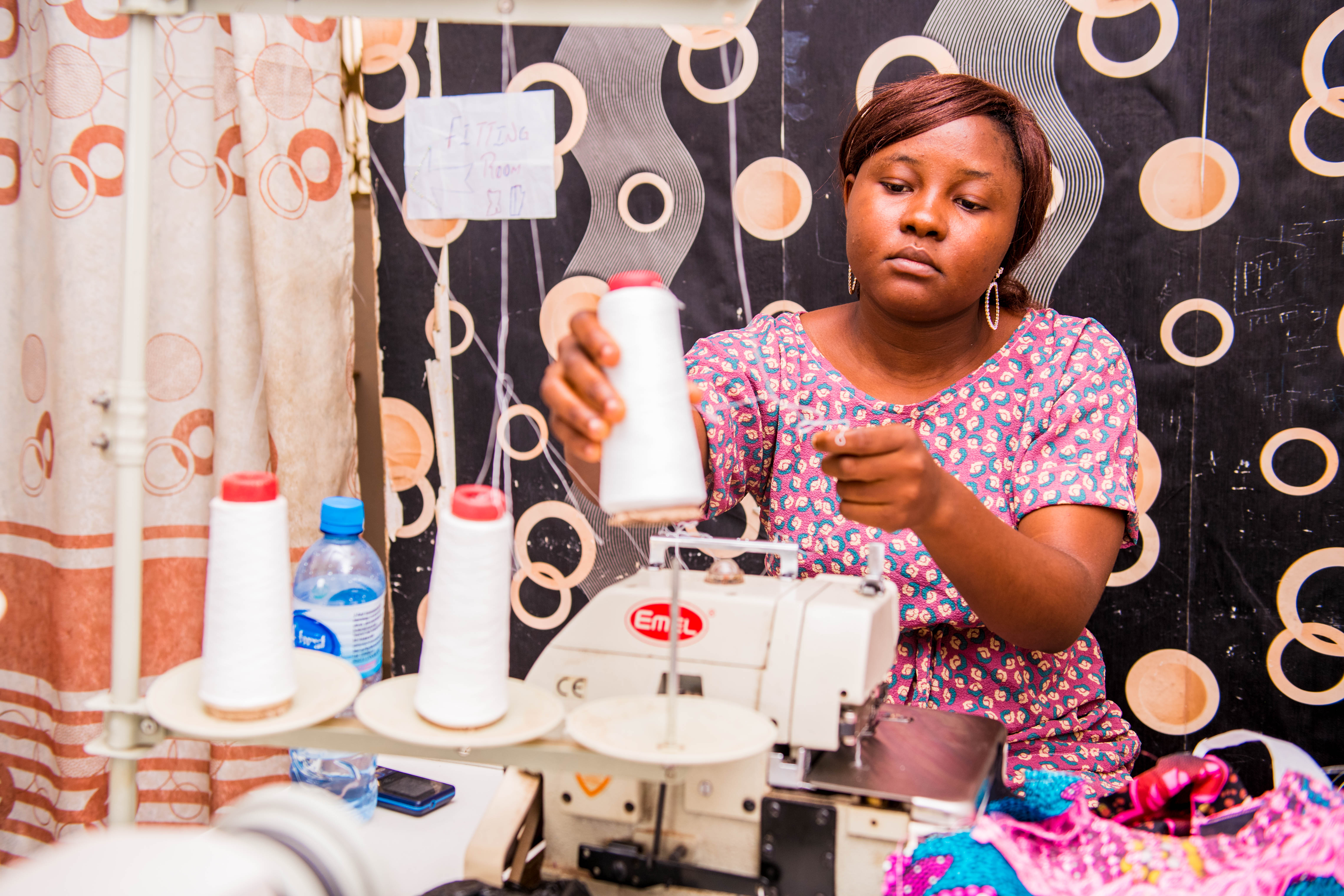
A seamstress works out of her shop in Minna, in northern Nigeria [Abdul Muhammad/Al Jazeera]

By Seun Shokunbi

Published On 21 Jul 202221 Jul 2022

Share

facebooktwitterwhatsappcopylink

Save

Over five years, from 2017 to 2022, women-led companies in Nigeria raised $221m.

But an astonishing 97 percent of that was concentrated in the commercial capital Lagos or in the southern region of the country, while a mere 2.8 percent went to women running businesses in northern Nigeria.

When investors decide to take risks, they appear to bet more on the more commercially viable south of Africa’s largest economy, not the north, which is usually associated with low developmental indicators.

The lack of substantial funding for formal and informal startup ecosystems in the north has left many women there vulnerable to financial insecurity, even as more of them become entrepreneurs.

A survey on women involved in informal cross-border trade, published in 2019  by UN Women and the African Development Bank (AfDB), shows that the most common reason for business ownership among women in the north is need.

Most of the women surveyed opened small shops or became street vendors to earn whatever they can to provide some level of economic stability for their family.

UN Women recommended investing in capacity-building programmes, including training in marketing and sales, for women entrepreneurs to effectively compete in regional markets.

Here are firsthand accounts by women living in the north-central city of Minna, talking about what it is like to run small businesses without the financing, visibility, or credibility afforded to their peers living closer to the country’s industrial hub.

Women in Northern Nigeria
Women in northern Nigeria largely self-finance to keep their businesses afloat. “I felt maybe it’s only the civil servants that [the banks] can give a loan to,” says Bunmi, pictured above, a seamstress living and working in Minna. “Since I’m no civil servant, I’m just a businessperson, I’m like, I don't even know how I would repay [the loan] back.” [Abdul Muhammad/Al Jazeera]
Advertisement
Without the additional capital from bank lenders or investors, women in Northern Nigeria find it challenging to purchase all the equipment needed to operate their businesses. When interviewed, Bunmi mentioned “I only have one [sewing] machine presently. So at times, you know, there are some designs that some people requested for, but I’m unable to meet up with what they requested.”
Without the additional capital from bank lenders or investors, women in northern Nigeria find it challenging to purchase equipment needed for their businesses. One woman said: “I only have one [sewing] machine presently. So at times, you know, there are some designs that some people requested for, but I’m unable to meet up with what they requested.” [Abdul Muhammad/Al Jazeera]
A view of a major intersection at Minna central market, where vendors set up shop to sell handmade goods. “The network is beautiful,” Bunmi, the seamstress, noted. “We have one big market here that we can get our materials.”
A view of a major intersection at Minna central market, where vendors set up shop to sell handmade goods. [Abdul Muhammad/Al Jazeera]
The Inter-agency Network for Education in Emergencies (INEE) reported in 2021 that over half of girls in Northern Nigeria were not enrolled in school. Bunmi managed to attend and complete her college degree but was still disappointed with the lack of opportunity upon graduating. “I attended Kwara State Polytechnic. I studied estate management. I got my certificate, then I'm still in search of job. So I'm now l ike, instead of me waiting, waiting, waiting, I engaged in going for sewing training.”
The Inter-agency Network for Education in Emergencies reported in 2021 that more than half of girls in northern Nigeria were not enrolled in school. Bunmi managed to attend and complete her college degree but was disappointed with the lack of opportunity upon graduating. “I attended Kwara State Polytechnic. I studied estate management. I got my certificate, then I'm still in search of job. So, I'm now like, instead of me waiting, waiting, waiting, I engaged in going for sewing training.” [Abdul Muhammad/Al Jazeera]
The UN has committed $1.1 billion USD in humanitarian aid for the region, but lower employment rates persist for women in Northern Nigeria compared to women in the rest of the country. Here, several women are pictured selling various goods in Minna’s central market.
The UN has committed $1.1bn in humanitarian aid for the region, but lower employment rates persist for women in northern Nigeria compared with the rest of the country. Here, women are pictured selling goods in Minna’s central market. [Abdul Muhammad/Al Jazeera]
A seamstress places two of her items on display. In a report published in 2019, UN Women recommended investing in capacity-building programs (including training in marketing and sales) for women entrepreneurs to effectively compete in regional markets. Many of the women interviewed in Minna discussed the challenge of being undervalued because of their limited formal training. “The people that we are dealing with…someone [like me] is finding it difficult to please them the way they want,” one business owner shared. “They will see [my dresses] and would love it quite alright. But they will look down on [me and my products] and what they are supposed to spend on it, they will not like to spend on it.”
A seamstress places two of her items on display. In a 2019 report, UN Women recommended investing in capacity-building programmes, including training in marketing and sales, for female entrepreneurs to effectively compete in regional markets. Many of the women interviewed in Minna discussed the challenge of being undervalued because of their limited formal training. “The people that we are dealing with ... someone [like me] is finding it difficult to please them,” one business owner shared. “They will see [my dresses] and would love it quite alright. But they will look down on [me and my products] and what they are supposed to spend on it, they will not like to spend on it.” [Abdul Muhammad/Al Jazeera]
Advertisement
A Minna woman sells street food and cooks with her daughter nearby. Several of the women interviewed discussed how their children were the main motivation for their hustle. “Honestly, there was a time I wanted to quit,” Tabitha, a food vendor and seamstress, admitted. “But when I look at my daughter, I say, will I carry my money to go and buy something that I know that I can make? Instead of me to buy a new dress for her, I can make that same dress that I'm going to buy. So then let me repair my machine so that we continue…I think that is what makes me to stand up on my ground to continue from where I stopped.”
A Minna woman cooks and sells street food with her daughter nearby. Many women interviewed said their children were the main motivation for their work. “Honestly, there was a time I wanted to quit,” Tabitha, a food vendor and seamstress, admitted. “But when I look at my daughter, I say, will I carry my money to go and buy something that I know that I can make? Instead of me to buy a new dress for her, I can make that same dress that I'm going to buy. So then let me repair my machine so that we continue ... I think that is what makes me to stand up on my ground to continue from where I stopped.” [Abdul Muhammad/Al Jazeera]
Initiatives have been launched to help more female entrepreneurs understand the African Continental Free Trade Area (AfCFTA) and its impact on their businesses. For Fatimah Kelleher, Senior Programmes Manager at The Commonwealth Secretariat (based in the UK), it’s vital for women business owners to know whether their business sector is helped or hampered by the trade liberalisation proposed in this agreement. Traditionally, most women-led enterprises in Northern Nigeria are concentrated in the informal sector, which includes dressmakers and hairdressers.
Initiatives have been launched to help more female entrepreneurs understand the African Continental Free Trade Area and its effect on their businesses. For Fatimah Kelleher, senior programmes manager at The Commonwealth Secretariat, based in the UK, it is vital for female business owners to know whether their business sector is helped or hampered by the trade liberalisation proposed in this agreement. [Abdul Muhammad/Al Jazeera]
A male vendor sells items on his bike in Minna, Nigeria. The UK Department for International Development found that Nigeria still hasn’t achieved gender parity in relation to employment. Even with the fastest-growing rate of any group starting businesses, Nigerian women (in both formal and informal sectors) are less likely to earn a livable wage compared to their male counterparts.
A male vendor sells items on his bike in Minna, Nigeria. The UK Department for International Development found that Nigeria still has not achieved gender parity in relation to employment. Even with the fastest-growing rate of any group starting businesses, Nigerian women, in both formal and informal sectors, are less likely to earn a livable wage compared to their male counterparts. [Abdul Muhammad/Al Jazeera]
In her shop, Bunmi prepares a garment for a client. One of her concerns as a business owner is that most of her clients are unable to pay the full price she charges for custom designs. “In Minna, we have 50 percent of people who are civil servants, earning their salary at the end of the month. If you produce work for them, you’ll wait until the end of the month before they will pay you. And some are low-income earners, so they will pay only part of the money…”
In her shop, Bunmi prepares a garment for a client. One of her concerns as a business owner is that most of her clients are unable to pay the full price she charges for custom designs. “In Minna, we have 50 percent of people who are civil servants, earning their salary at the end of the month. If you produce work for them, you’ll wait until the end of the month before they will pay you. And some are low-income earners, so they will pay only part of the money.” [Abdul Muhammad/Al Jazeera]
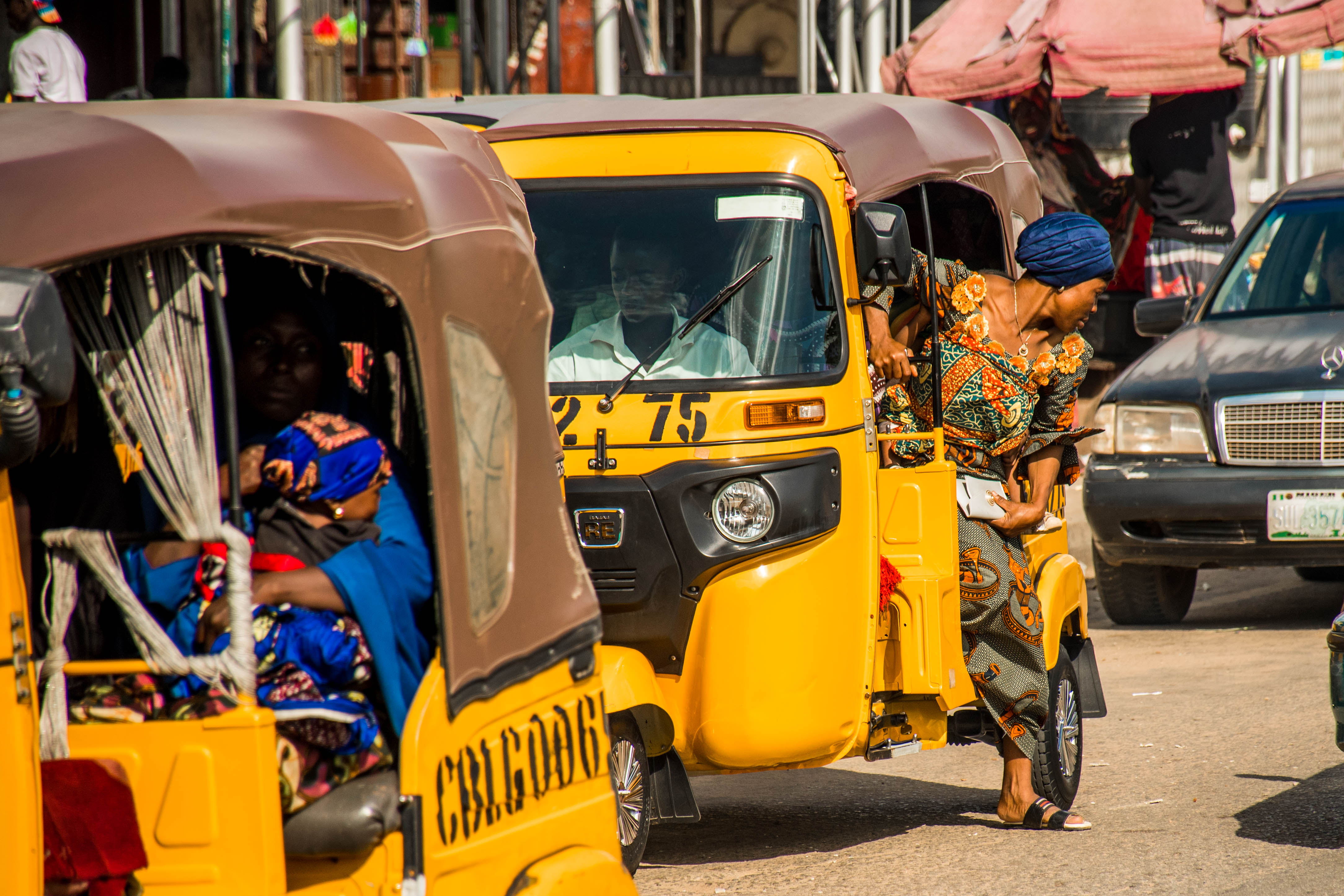
A female shopkeeper hails a taxi to take her to her shop. Transportation costs, security, and congestion remain major obstacles to getting people and goods from one city to the next in Northern Nigeria. Vendors l ike Bunmi admit this limits their access to quality inputs for the products they sell in their shops. “Some are not as good, like maybe traveling to Lagos, not as good as traveling to like outside these (Northern) states…it would be more expensive traveling to go and get them anywhere else.”
A female shopkeeper hails a taxi to take her to her shop. Transportation costs, security, and congestion remain major obstacles to getting people and goods from one city to the next in northern Nigeria. Vendors like Bunmi admit this limits their access to quality inputs for the products they sell in their shops. “Some are not as good, like maybe travelling to Lagos, not as good as travelling to like outside these [northern] states ... It would be more expensive travelling to go and get them anywhere else.” [Abdul Muhammad/Al Jazeera]
In this photo, a woman negotiates prices for her fresh produce. Women in Informal Cross-Border Trade (or WICBT) is a common term used within the international development community to describe strategies for gradually building women microbusinesses into dynamic enterprises, and not simply businesses that barely sustain their livelihoods. However, the lack of investors, trade associations, and adequate infrastructure to permit sustainable growth limits the impact WICBT initiatives can have.
A woman negotiates prices for her fresh produce. Women in Informal Cross-Border Trade (WICBT) is a common term used by the international development community to describe strategies for gradually building women microbusinesses into dynamic enterprises, and not simply businesses that barely sustain their livelihoods. However, the lack of investors, trade associations, and adequate infrastructure to permit sustainable growth limits the effect WICBT initiatives can have. [Abdul Muhammad/Al Jazeera]
Faith places a significant part in helping women stay positive about the financial success of their businesses. One woman said “the best part of doing a business in Minna is…self-independence. You don't have to rely on anyone for any money or anything being added but the help of God.” As of 2018, 56 percent of Nigerians identify as Christians, while 42 percent practice Islam (source: Review of Religious Research). Nigeria’s southern region remains majority Christian, while the North consists majorly of Muslims.
Faith plays a significant part in helping women stay positive about the financial success of their businesses. One woman said, “The best part of doing a business in Minna is ... self-independence. You don't have to rely on anyone for any money or anything being added but the help of God.” As of 2018, 56 percent of Nigerians identify as Christians, while 42 percent practice Islam, according to an article in the Review of Religious Research. Nigeria’s southern region remains majority Christian, while the North is mostly Muslim. [Abdul Muhammad/Al Jazeera]
As Bunmi closes her shop for the day, she offers this reflection on her persistence in a volatile economy: “In this life, if you have made up your mind to be a businessman or a woman, you take risks…So if peradventure, it arises that they say, [an investor] doesn’t want to work with me because I'm not giving them what they want, then I think I would take it in good faith. I think it's in good faith. Because that [business deal] was not made for me, because anything that belongs to me will surely be mine.”
As Bunmi closes her shop for the day, she offers this reflection on her persistence in a volatile economy: “In this life, if you have made up your mind to be a businessman or a woman, you take risks .. So if ... they say [an investor] doesn’t want to work with me because I'm not giving them what they want, then I think I would take it in good faith. I think it's in good faith. Because that [business deal] was not made for me, because anything that belongs to me will surely be mine.” [Abdul Muhammad/Al Jazeera]

More from Gallery

  • Survivors recall terror of landslides from North Sumatra cyclone

    Many survivors are looking for their missing loved ones. Some were carried away by floodwaters, others buried under the mud.
    This gallery article has 14 imagescamera14
  • Photos: Gaza university resumes in-person classes

    Gaza University
    This gallery article has 7 imagescamera7
  • Photos: Pope prays at site of 2020 Beirut port explosion

    Pope Leo XIV visit to Lebanon
    This gallery article has 7 imagescamera7
  • Photos: Recovery under way after floods in Indonesia, Sri Lanka, Thailand

    Rescuers move people to safety on a small boat in a flooded area.
    This gallery article has 8 imagescamera8

Most popular

  • ‘Uninterrupted oil shipments’: Key takeaways from Putin-Modi talks in Delhi

    Russia's President Vladimir Putin and India's Prime Minister Narendra Modi are seen after their talks at Hyderabad House in New Delhi on December 5, 2025 [Alexander Kazakov/Sputnik/Pool via AFP]
  • Infantino’s ‘Peace Prize’ to Trump raises questions about FIFA’s neutrality

    Trump and Infantino
  • FIFA World Cup 2026 draw – updates

    A picture shows groups A, B, C, D, E, F, G, H, I, J, K and L during the draw for the 2026 FIFA Football World Cup taking place in the US, Canada and Mexico, at the Kennedy Center, in Washington, DC, on December 5, 2025. (Photo by Mandel NGAN / POOL / AFP)
  • Pakistan seeks new South Asian bloc to cut India out: Will it work?

    Mohammad Touhid Hossain, foreign affairs adviser of Bangladesh's interim government and Ishaq Dar, Pakistan's foreign minister, attend a bilateral meeting in Dhaka, Bangladesh [File: Bangladesh's Ministry of Foreign Affairs/Handout via Reuters]

  • About

    • About Us
    • Code of Ethics
    • Terms and Conditions
    • EU/EEA Regulatory Notice
    • Privacy Policy
    • Cookie Policy
    • Cookie Preferences
    • Accessibility Statement
    • Sitemap
    • Work for us
  • Connect

    • Contact Us
    • User Accounts Help
    • Advertise with us
    • Stay Connected
    • Newsletters
    • Channel Finder
    • TV Schedule
    • Podcasts
    • Submit a Tip
    • Paid Partner Content
  • Our Channels

    • Al Jazeera Arabic
    • Al Jazeera English
    • Al Jazeera Investigative Unit
    • Al Jazeera Mubasher
    • Al Jazeera Documentary
    • Al Jazeera Balkans
    • AJ+
  • Our Network

    • Al Jazeera Centre for Studies
    • Al Jazeera Media Institute
    • Learn Arabic
    • Al Jazeera Centre for Public Liberties & Human Rights
    • Al Jazeera Forum
    • Al Jazeera Hotel Partners

Follow Al Jazeera English:

  • facebook
  • twitter
  • youtube
  • instagram-colored-outline
  • rss
Al Jazeera Media Network logo
© 2025 Al Jazeera Media Network