Skip linksSkip to Content
Challenging harvest syrian refugees jordan 150619104932943.html - Latest News & Updates
Live
Navigation menu
  • News
    • Africa
    • Asia
    • US & Canada
    • Latin America
    • Europe
    • Asia Pacific
  • Middle East
  • Explained
  • Opinion
  • Sport
  • Video
    • Features
    • Economy
    • Human Rights
    • Climate Crisis
    • Investigations
    • Interactives
    • In Pictures
    • Science & Technology
    • Podcasts
    • Travel
play
Live

In Pictures

Gallery|Human Rights

A challenging harvest for Syrian refugees in Jordan

Many Syrian Bedouins who fled violence in their home country are working for under-the-table wages on Jordanian farms.


Syrian beduin refugees/ DO NOT USE/ RESTRICTED
A tent dots the horizon in the northern Jordanian province of Mafraq near the Syrian border. According to UNHCR, about 340 informal settlements house 16,000 Syrian refugees across the country. [Alisa Reznick/Al Jazeera]

By Alisa Reznick

Published On 20 Jul 201520 Jul 2015

Share

facebooktwitterwhatsappcopylink

Save

Mafraq, Jordan – A few paces from the Syrian border in northern Jordan, a dirt track leads to a rocky hilltop covered with sand-hued tents overlooking plots of farmland. As the Syrian conflict grinds on, even nomadic groups like the local Bedouin have been fleeing the violence.

“One of the clear indications of how bad Syria was getting was when we saw Bedouins crossing over into Jordan,” Andrew Harper of UNHCR, the United Nations refugee agency, told Al Jazeera. “These are people who are very tied to their land and their tribal areas, and often have nothing to do with politics – so seeing them come across as refugees was a clear sign.”

UNHCR first recorded an increase in Bedouin refugees near the end of 2013. Around 630,000 Syrians are registered with the agency in Jordan, of which an estimated 16,000 are living in informal settlements like these.

Shunning the kingdom’s refugee camps to live in tent settlements was an intentional choice for the Bedouin refugees, many of whom worked as farmers in agriculture-based centres in Syria. Some hoped to do the same in Jordan, but Syrians are not allowed to work without a permit or to live outside the country’s refugee camps without permission. Many instead work for under-the-table wages on farms around the country, while the threat of possible government eviction hangs heavy.

As a result, all Syrians portrayed in these photos asked that their names be withheld.

Syrian beduin refugees/ DO NOT USE/ RESTRICTED
A woman from the countryside of Syria's eastern Hama province stands outside her tent with her two children. Often, Syrian Bedouins belonging to the same tribe split plots of land near the farms where they work. [Alisa Reznick/Al Jazeera]
Advertisement
Syrian beduin refugees/ DO NOT USE/ RESTRICTED
A Syrian Bedouin pulls out watermelons from a plot of land in Mafraq during this summer's harvesting season. [Alisa Reznick/Al Jazeera]
Syrian beduin refugees/ DO NOT USE/ RESTRICTED
A Syrian Bedouin from the rural countryside of eastern Syria sits in his family's tent near the northern Jordanian border. [Alisa Reznick/Al Jazeera]
Syrian beduin refugees/ DO NOT USE/ RESTRICTED
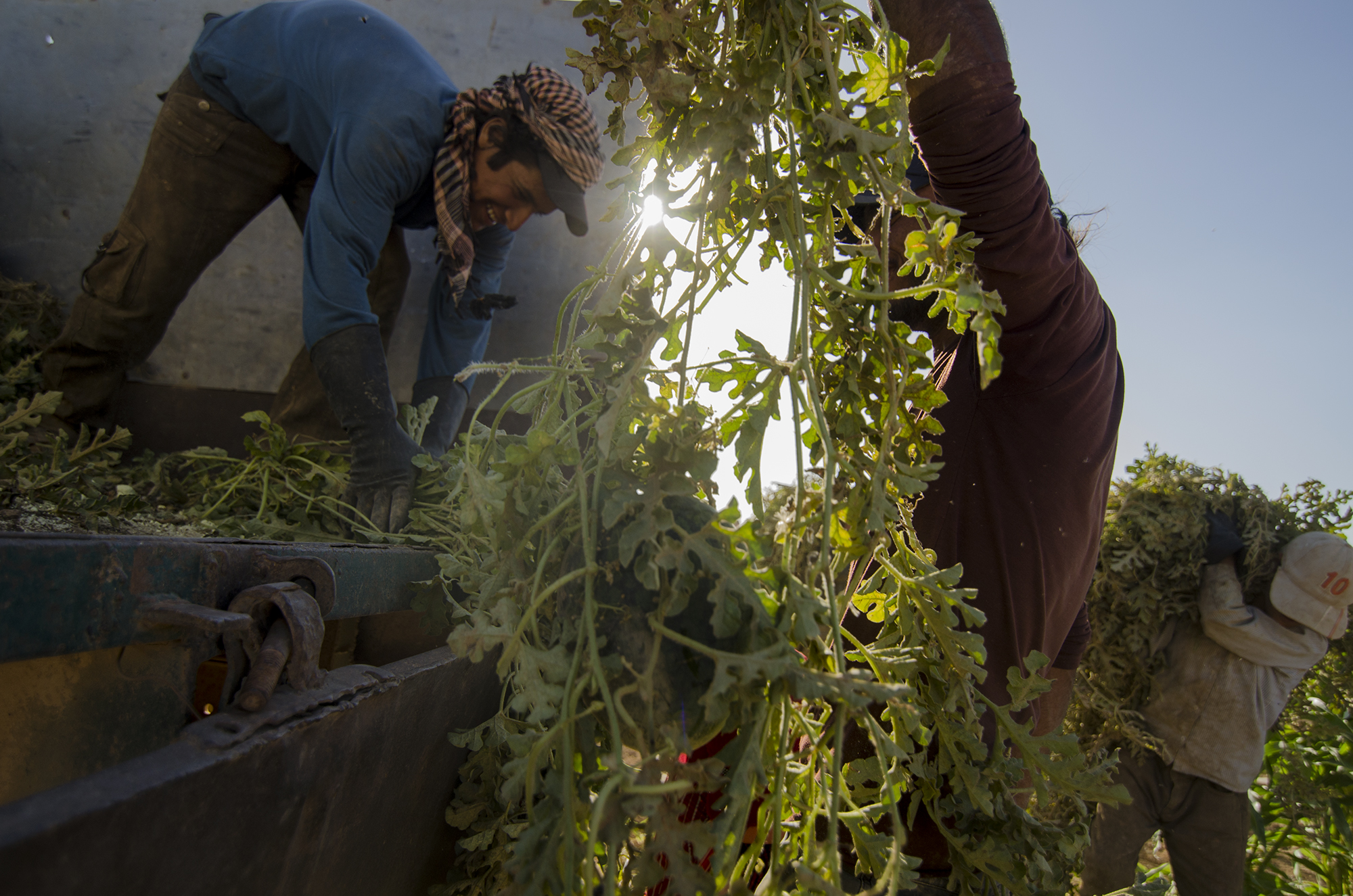
A Bedouin woman from Hama clears brush from a watermelon harvest in preparation for a new cultivation. The lack of work permits in the country leaves refugees vulnerable to exploitation by employers, according to UNHCR. [Alisa Reznick/Al Jazeera]
Syrian beduin refugees/ DO NOT USE/ RESTRICTED
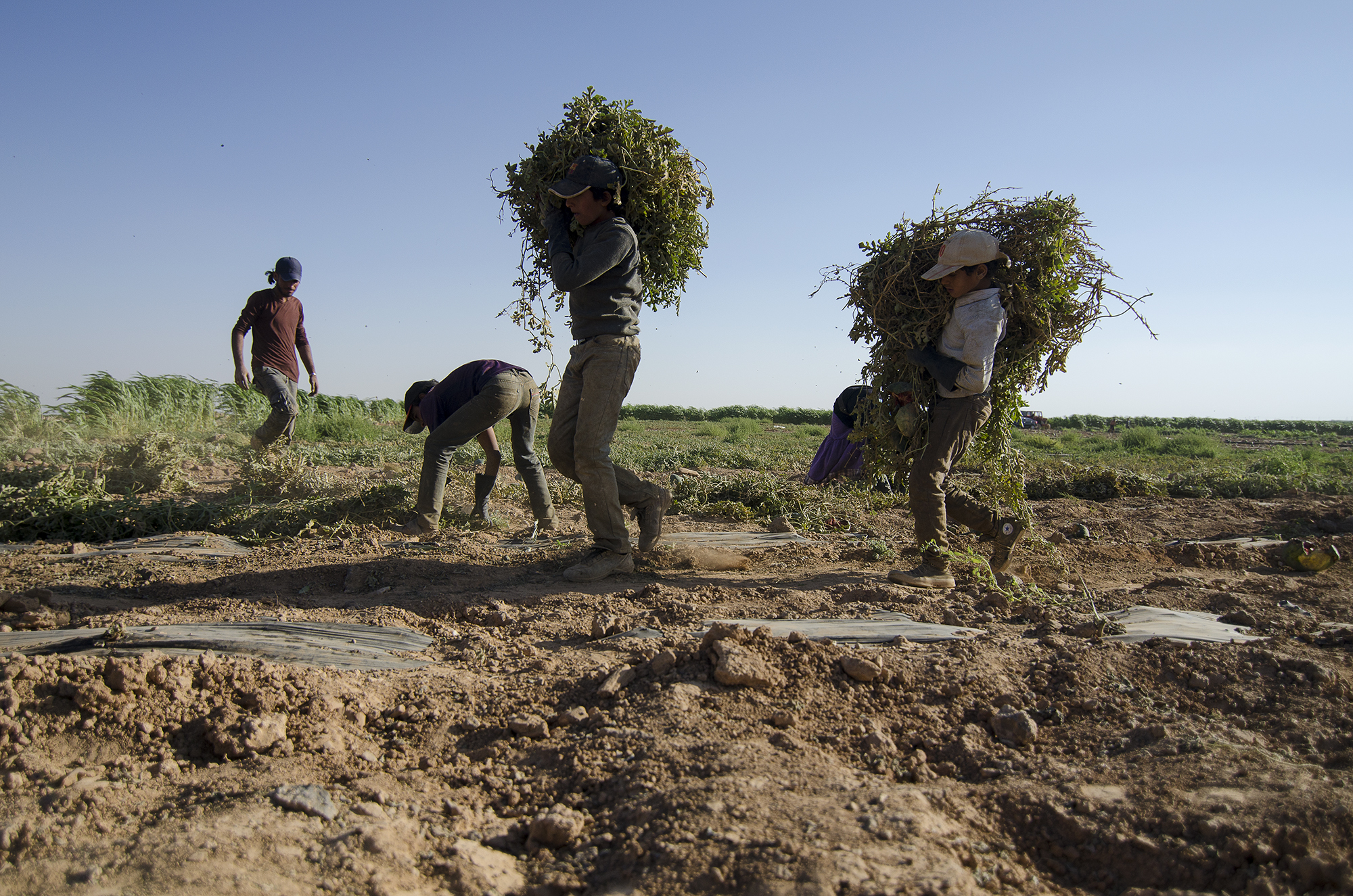
Many of the Bedouins who are now working under-the-table were also farmers back in Syria before the conflict forced them out. [Alisa Reznick/Al Jazeera]
Syrian beduin refugees/ DO NOT USE/ RESTRICTED
Young Bedouin boys work alongside their relatives. Child labour among Syrians is widespread in Jordan. [Alisa Reznick/Al Jazeera]
Advertisement
Syrian beduin refugees/ DO NOT USE/ RESTRICTED
According to a 2014 assessment by UNICEF, minors comprised three-quarters of the populations of Jordan's informal settlements. [Alisa Reznick/Al Jazeera]
Syrian beduin refugees/ DO NOT USE/ RESTRICTED
As many refugee children do not have access to schooling in the area, they play around the farms. [Alisa Reznick/Al Jazeera]
Syrian beduin refugees/ DO NOT USE/ RESTRICTED
A 15-year-old Syrian girl from rural Hama sits in her family's tent in northern Jordan. More than two dozen school-aged children living in the settlement cannot access education due to overcrowding in local schools. [Alisa Reznick/Al Jazeera]
Syrian beduin refugees/ DO NOT USE/ RESTRICTED
The community leader of the settlement in Mafraq fled his home in rural Hama in 2012. Though he has Jordanian relatives, he said he preferred to forge his own path and seek employment independently. [Alisa Reznick/Al Jazeera]
Syrian beduin refugees/ DO NOT USE/ RESTRICTED
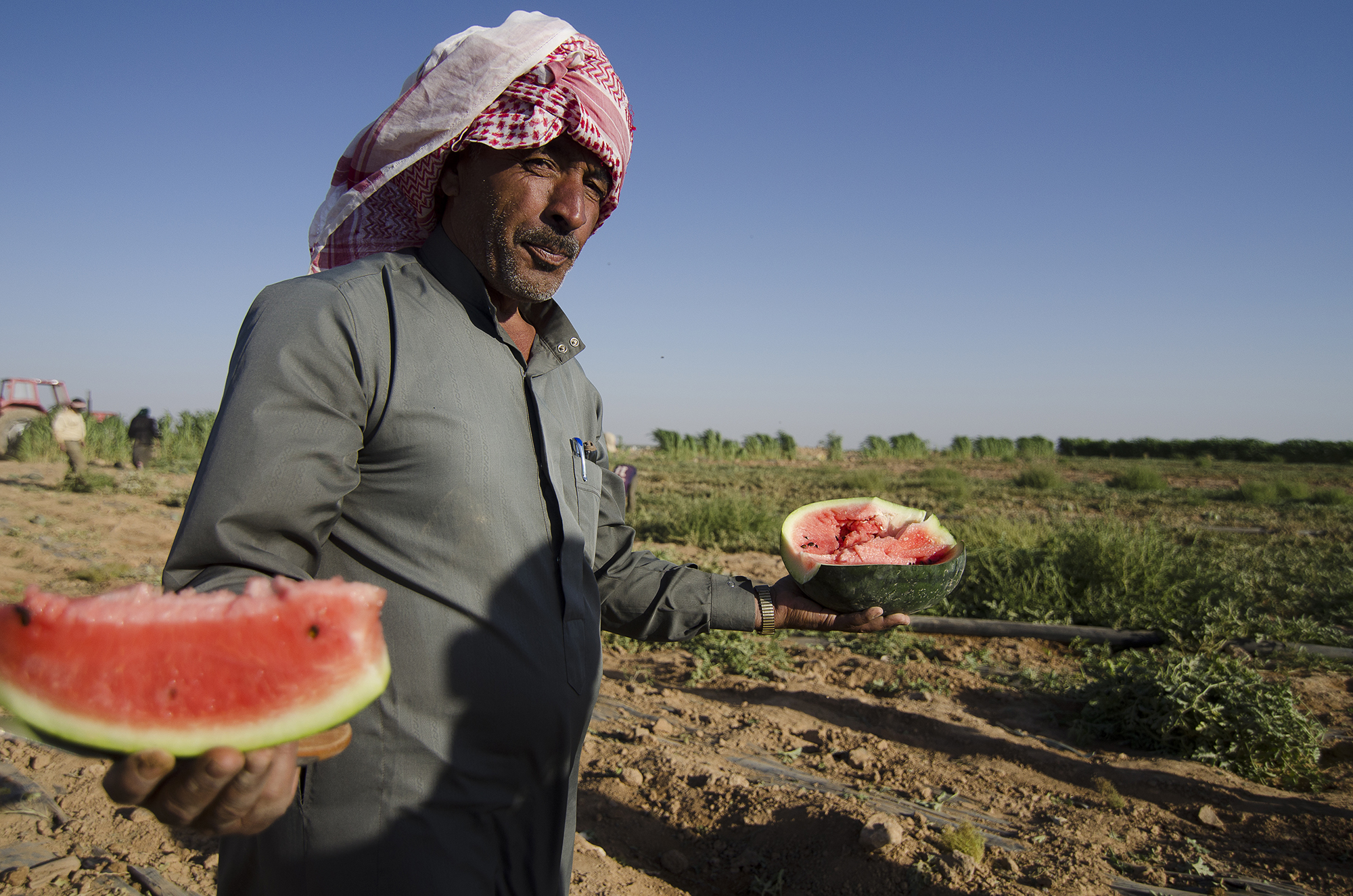
A Syrian man shows the product of the most recent harvest from the plot he tends in northern Jordan. Long hours and pay below the minimum wage makes refugees without legal work status an alluring resource for Jordanian farm owners. [Alisa Reznick/Al Jazeera]
Syrian beduin refugees/ DO NOT USE/ RESTRICTED
A family's monthly income on the farm might reach 600 Jordanian dinars ($850) for very large families. [Alisa Reznick/Al Jazeera]
Syrian beduin refugees/ DO NOT USE/ RESTRICTED
The threat of possible government eviction hangs heavy for the workers. [Alisa Reznick/Al Jazeera]
Syrian beduin refugees/ DO NOT USE/ RESTRICTED
Syrian men head back to their tents after spending a day working in the fields for as little as 10 Jordanian dinars ($14). [Alisa Reznick/Al Jazeera]

Related

  • Experts say US boat strikes are illegal killings. Can they be stopped?

    At least 86 people have been killed in strikes on alleged drug trafficking boats that experts call illegal killings.

    Published On 5 Dec 20255 Dec 2025
    President Donald Trump talks with Defense Secretary Pete Hegseth
  • Sudan’s Khartoum needs ‘urgent’ help due to severe food shortages: Report

    Report by NGOs also finds healthcare system largely not functioning in Khartoum, months after city recaptured by army.

    Published On 5 Dec 20255 Dec 2025
    A Sudanese Armed Forces soldier walking on a bridge amidst ruins and destroyed cars.
  • British soldiers accused of more abuses in Kenya: What we know

    British soldiers training in Kenya abused women and caused environmental destruction for years, parliament has said.

    Published On 5 Dec 20255 Dec 2025
    Family members of the late Agnes Wanjiru cry after a court session.
  • Hong Kong student union suspended over calls for justice for fire victims

    Hong Kong Baptist University student union says suspension was ‘unfounded’ and may have ‘ulterior motives’.

    Published On 5 Dec 20255 Dec 2025
    A woman takes a photo with her phone above barricades in front of the student union-run notice board.

More from Gallery

  • Survivors recall terror of landslides from North Sumatra cyclone

    Many survivors are looking for their missing loved ones. Some were carried away by floodwaters, others buried under the mud.
    This gallery article has 14 imagescamera14
  • Photos: Gaza university resumes in-person classes

    Gaza University
    This gallery article has 7 imagescamera7
  • Photos: Pope prays at site of 2020 Beirut port explosion

    Pope Leo XIV visit to Lebanon
    This gallery article has 7 imagescamera7
  • Photos: Recovery under way after floods in Indonesia, Sri Lanka, Thailand

    Rescuers move people to safety on a small boat in a flooded area.
    This gallery article has 8 imagescamera8

Most popular

  • Infantino’s ‘Peace Prize’ to Trump raises questions about FIFA’s neutrality

    Trump and Infantino
  • ‘Uninterrupted oil shipments’: Key takeaways from Putin-Modi talks in Delhi

    Russia's President Vladimir Putin and India's Prime Minister Narendra Modi are seen after their talks at Hyderabad House in New Delhi on December 5, 2025 [Alexander Kazakov/Sputnik/Pool via AFP]
  • Arab, Muslim nations reject Israel exit-only plan for Gaza’s Rafah crossing

    Rafah crossing, Gaza
  • FIFA World Cup 2026 draw – updates

    A picture shows groups A, B, C, D, E, F, G, H, I, J, K and L during the draw for the 2026 FIFA Football World Cup taking place in the US, Canada and Mexico, at the Kennedy Center, in Washington, DC, on December 5, 2025. (Photo by Mandel NGAN / POOL / AFP)

  • About

    • About Us
    • Code of Ethics
    • Terms and Conditions
    • EU/EEA Regulatory Notice
    • Privacy Policy
    • Cookie Policy
    • Cookie Preferences
    • Accessibility Statement
    • Sitemap
    • Work for us
  • Connect

    • Contact Us
    • User Accounts Help
    • Advertise with us
    • Stay Connected
    • Newsletters
    • Channel Finder
    • TV Schedule
    • Podcasts
    • Submit a Tip
    • Paid Partner Content
  • Our Channels

    • Al Jazeera Arabic
    • Al Jazeera English
    • Al Jazeera Investigative Unit
    • Al Jazeera Mubasher
    • Al Jazeera Documentary
    • Al Jazeera Balkans
    • AJ+
  • Our Network

    • Al Jazeera Centre for Studies
    • Al Jazeera Media Institute
    • Learn Arabic
    • Al Jazeera Centre for Public Liberties & Human Rights
    • Al Jazeera Forum
    • Al Jazeera Hotel Partners

Follow Al Jazeera English:

  • facebook
  • twitter
  • youtube
  • instagram-colored-outline
  • rss
Al Jazeera Media Network logo
© 2025 Al Jazeera Media Network