Israel kills seven people in Gaza, says Rafah crossing to partially reopen
Israel says the crucial Rafah crossing with Egypt will open in the coming days – but only for Palestinians to leave Gaza.
Israel accused of ‘manoeuvring’ as it says Gaza crossing open one way only

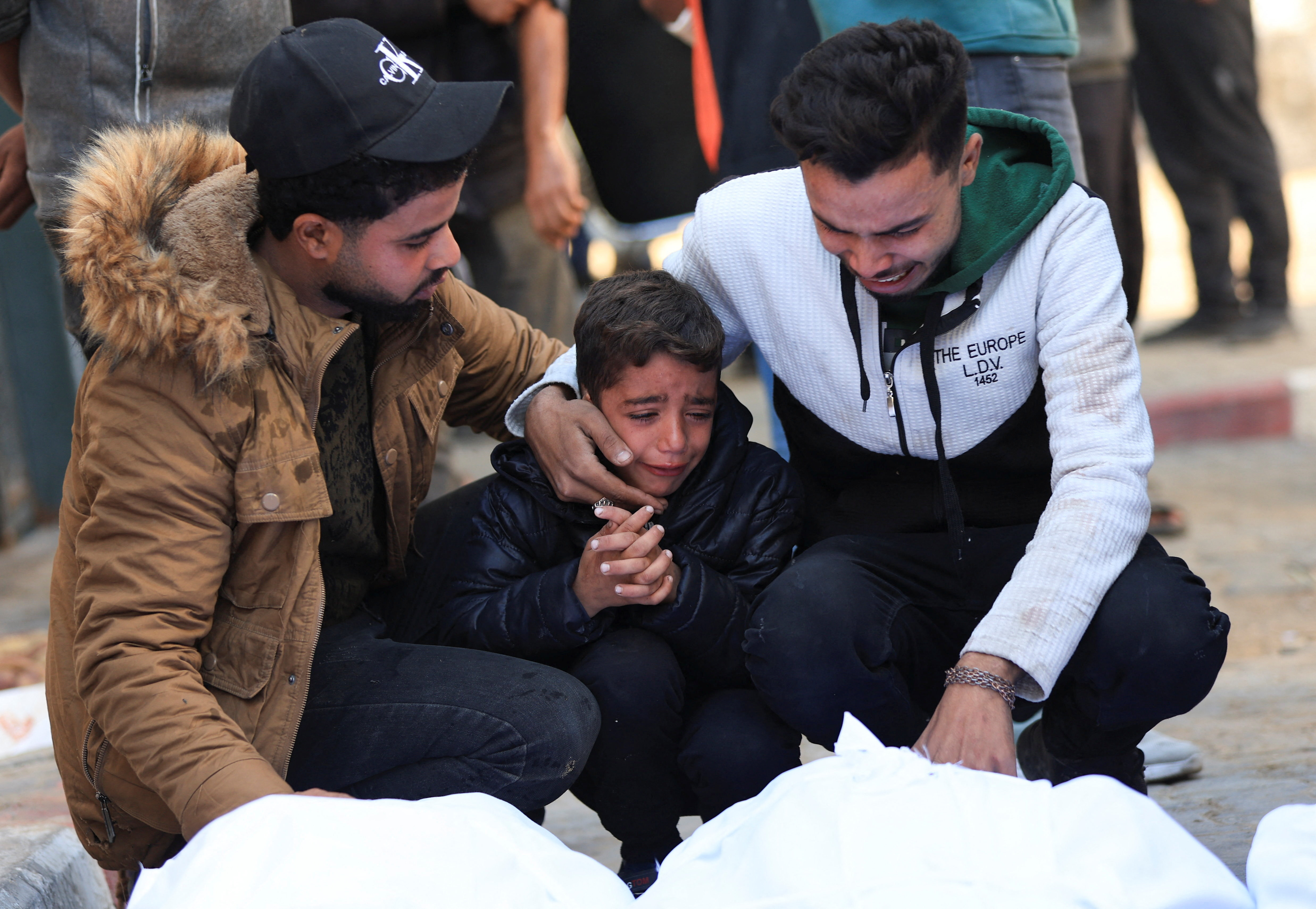
Israel’s military has killed seven Palestinians, including two children, in Gaza and announced that it will allow the Rafah crossing to open exclusively for the exit of people from the war-torn territory.
The killings on Wednesday mark the latest Israeli violations of a United States-brokered ceasefire in Gaza and came after the military accused Hamas fighters of attacking and wounding four of its soldiers in southern Rafah, near the enclave’s border with Egypt.
Recommended Stories
list of 4 items- list 1 of 4Trump plans crackdown on Somali communities in Minnesota: What we know
- list 2 of 4US-Venezuela tensions: Your questions answered
- list 3 of 4Bangladesh’s economy is not collapsing but undergoing a necessary reset
- list 4 of 4Trump admin takes aim at New Orleans in latest US immigration crackdown
The victims of Israel’s attacks included two Palestinians who were killed by Israeli gunfire in the Zeitoun neighbourhood of northern Gaza City and five who were killed in attacks on the southern al-Mawasi camp, medics said.
The bombings in al-Mawasi triggered a fire that engulfed several tents.
“Five citizens, including two children, killed and others injured, some seriously, as a result of an Israeli missile strike” in al-Mawasi, said civil defence spokesman Mahmoud Basal.
The slain children were aged eight and 10, sources at the Kuwaiti Hospital said, while another 32 Palestinians were wounded.
Some of the victims were severely burned, the Palestinian Wafa news agency reported.
Hamas condemned the al-Mawasi attack, describing it as a “war crime” that demonstrated Israel’s “disregard to the ceasefire agreement”. The Palestinian group demanded mediators – Egypt, Qatar and the US – restrain the Israeli military.
According to authorities in Gaza, Israeli forces have violated the ceasefire at least 591 times since it came into effect on October 10, killing at least 360 Palestinians and wounding 922 others.
Separately on Wednesday, Israel’s military also confirmed receiving the remains of what could be one of the two remaining captives in Gaza from Palestinian armed groups via the International Committee of the Red Cross.

The handover came hours after Israeli Prime Minister Benjamin Netanyahu said that forensic testing on partial remains returned by Hamas the previous day did not match either of the captives still in Gaza.
Since the fragile truce started, Hamas has returned all 20 living captives and 26 bodies in exchange for approximately 2,000 Palestinian detainees and prisoners.
Rafah crossing
The exchanges are a key condition of the initial phase of US President Donald Trump’s 20-point plan to end Israel’s genocidal war on Gaza. The first phase also calls for Israeli authorities to let in humanitarian aid into the territory and open “the Rafah crossing in both directions”.
Israel, however, has continued to restrict the entry of aid, while a military unit called Israel’s Coordination of Government Activities in the Territories (COGAT) said on Wednesday that the “Rafah Crossing will open in the coming days exclusively for the exit of residents from the Gaza Strip to Egypt”.
Those wishing to leave Gaza will require “security approval”, COGAT added.
Israel’s statement immediately raised fears the move could lead to the permanent displacement of Palestinians, something far-right ministers in Netanyahu’s hardline government have promoted for months.
“It’s hard to see this statement on the Rafah crossing as something that is meant to restore freedom of movement for Palestinians rather than restricting it,” said Al Jazeera’s Hani Mahmoud, reporting from Gaza City.
“It’s directed to give less mobility to Palestinians because it does not guarantee their return after being forced out of Gaza. It’s rather accelerating the process of depopulating the Gaza Strip,” he added.
Egypt, meanwhile, said the crossing will open only if movement goes both ways.
Egypt’s State Information Service, citing an unnamed official, said Cairo has not agreed to any plan to open the crossing for outbound movement only.
Any agreement with Israel, the official said, would require opening Rafah in both directions in line with the current ceasefire plan. The source denied coordination with Israel over the reopening.
Hussein Haridy, a former Egyptian assistant foreign minister, said Egypt remains “committed to UN Security Council Resolution 2803, adopted on October 17 last year, which endorsed a ceasefire plan”.
All crossings should be opened under the resolution, and Egypt is working with the European Union and the Palestinian Authority on operating the posts, including Rafah, when conditions allow, he told Al Jazeera from Cairo.
“We need to operate the Rafah crossing according to the [US President Donald] Trump peace plan. Ever since 1948, the date Israel was established, we’ve become accustomed to Israeli manoeuvring when it comes to implementing ceasefire agreements,” said Haridy.
“Having said that, we will take Israel to task if they don’t implement the Security Council resolution.”
Full reopening
The United Nations also called for the full reopening of Rafah.
“What we want to see is Rafah reopened fully for the movement of humanitarian cargo, for the movements of people, and both for humanitarian workers,” said Stephane Dujarric, spokesman for UN Secretary-General Antonio Guterres.
“If residents of Gaza, Palestinians, want to leave, they need to be able to do so voluntarily and freely without any pressure. And for those residents of Gaza who may have left the enclave a while ago, if they wish to return, they should be able to return,” he added.
President Trump, meanwhile, insisted that the ceasefire was “going along well” and that “we have peace in the Middle East”. He also told reporters in Washington, DC, that the second phase of his plan for Gaza was “going to happen very soon”.
Once the terms of the first phase are completed, the Trump plan is supposed to advance to the next phases, which call for creating an international stabilisation force, forming a technocratic Palestinian government and disarming Hamas.
The Palestinian group, however, has opposed the move, saying it will not lay down arms as long as Israeli occupation of Palestinian territory continues.
The World Health Organization, meanwhile, estimates more than 8,000 Palestinian patients have been evacuated out of Gaza since the start of the war in October 2023. But it said there are still more than 16,500 sick and wounded people who need to leave Gaza for medical care.
Doctors Without Borders, known by its French acronym MSF, told the AFP news agency that the need for more medical evacuations is “really huge”.
So far, more than 30 countries have accepted patients, but only a few – including Egypt and the United Arab Emirates – have taken in large numbers.
Italy has taken in more than 200 patients, compared with France, which had accepted 27 by the end of October, and Germany, which had taken in none.
“Countries are taking a long time to decide or allocate the budget for these patients, but [they cannot] wait for this discussion to happen,” said Hani Isleem, MSF’s coordinator for medical evacuations from Gaza.
Israel’s war on Gaza has killed at least 70,117 Palestinians and wounded 170,999 since October 2023. A total of 1,139 people were killed in Israel during the October 7, 2023, Hamas-led attacks, and about 200 were taken captive.
