
- 2 Sep 2025 - 14:00(14:00 GMT)
Thanks for joining us
This live page is now closed.
Rescuers continue to try to reach remote areas in eastern Afghanistan’s Kunar region, according to Taliban government spokesman Zabihullah Mujahid. Read our news story here.
Why do shallow earthquakes cause more destruction than deep ones? Read our explainer here.
What we know about Afghanistan’s earthquake – watch our report here.
Afghanistan is prone to earthquakes due to its location at the intersection of the Indian and Eurasian tectonic plates. Check out the timeline of Afghanistan’s deadliest earthquakes since 2015 here.
- 2 Sep 2025 - 13:45(13:45 GMT)
Here’s what happened today
We will soon be closing this live page. Here’s a look at the day’s key events:
- Taliban government spokesman Zabihullah Mujahid says at least 1,411 people have been killed in Kunar, the province hardest hit by Sunday’s magnitude 6.0 earthquake.
- A new 5.2 magnitude earthquake hit the same region today, according to the US Geological Survey (USGC). The quake originated 34 kilometres (nearly 21 miles) northeast of Jalalabad, at 12:29 GMT, at a depth of 10km (nearly 6.2 miles) the USGS stated.
- The United Kingdom says it has allocated 1 million pounds ($1.35m) to support the efforts of the United Nations and the Red Cross in delivering healthcare and emergency supplies to affected Afghans, whilst India says it has delivered 1,000 family tents to Kabul and is transporting 15 tonnes of food to Kunar, with additional relief materials scheduled to be sent later today.
- 2 Sep 2025 - 13:30(13:30 GMT)

More information about the latest earthquake
The quake’s epicentre was 34km (nearly 21 miles) northeast of Jalalabad, and it hit at 4:59pm (12:29 GMT) at a depth of 10km (6.2 miles).
The earthquake was also felt in northwestern Pakistan.
The Pakistan Meteorological Department calculated the earthquake’s magnitude at 5.4 and located its epicentre in southeastern Afghanistan.
Advertisement - 2 Sep 2025 - 13:08(13:08 GMT)

New 5.2 magnitude quake strikes northeast Afghanistan
Northeastern Afghanistan has been struck by a 5.2 magnitude earthquake, according to the US Geological Survey.
According to its website, the quake struck at a depth of 10km (6.2 miles).
In comparison, Sunday’s earthquake was magnitude 6.0, and its epicentre was at a depth of about 8km (5 miles).
We will bring you more information as we get it.
- 2 Sep 2025 - 13:00(13:00 GMT)
If you’re just joining us
Here’s what you need to know:
- Taliban government spokesman Zabihullah Mujahid says at least 1,411 people have been killed in Kunar, the province hardest hit by the magnitude 6.0 earthquake.
- Indrika Ratwatte, the UN humanitarian coordinator in Afghanistan, says the quake could affect “hundreds of thousands”, as he warned of an “exponential” rise in casualties amid difficulties being faced by rescue workers due to the mountainous terrain.
- The United Kingdom has allocated 1 million pounds ($1.35m) to support the efforts of the United Nations and the Red Cross in delivering healthcare and emergency supplies to affected Afghans.
- Indian External Affairs Minister Subrahmanyam Jaishankar says India has delivered 1,000 family tents to Kabul and is transporting 15 tonnes of food to Kunar, with additional relief materials scheduled to be sent later today.
- 2 Sep 2025 - 12:45(12:45 GMT)
EU to send emergency supplies, financial help
The European Union says it is sending 130 tonnes of emergency supplies and providing 1 million euros ($1.16m) to help victims of the deadly quake.
The bloc has become one of the key aid donors to Afghanistan after the United States – previously the country’s largest aid provider – cut all but a slice of its assistance after President Donald Trump took office in January.
The aid cuts risk impeding the response to the earthquake, experts said, in a country already facing one of the world’s worst humanitarian crises after decades of conflict.
- 2 Sep 2025 - 12:30(12:30 GMT)
How can Afghanistan build resilience from quakes?
Hemmed in by rugged mountains, Afghanistan is prone to a range of natural disasters, but its earthquakes cause the most fatalities, killing about 560 people on average each year and causing damage estimated at $80m a year.
Studies indicated at least 355 earthquakes with a magnitude higher than 5 have hit Afghanistan since 1990. The country has recorded about 100 “damaging” earthquakes since 1900.
Studies recommended that new structures be built to be earthquake-resistant and existing buildings be retrofitted to reduce their chances of collapse.
Better monitoring and early warning systems should also be created for more timely alerts while fault lines should be mapped using geospatial and remote sensing technologies to enable relocation of people in vulnerable areas, they suggested.
- 2 Sep 2025 - 12:15(12:15 GMT)
When was Afghanistan’s last major earthquake?
On October 7, 2023, a magnitude 6.3 earthquake hit 40km (24 miles) northwest of the city of Herat about 11am (06:30 GMT), according to the US Geological Survey (USGS). Strong aftershocks were felt in neighbouring Badghis and Farah provinces.
The USGS said the quake was followed by three strong aftershocks of magnitudes 6.3, 5.9 and 5.5 as well as weaker shocks.
According to the British Red Cross Society, at least 2,445 people were killed.
Abdul Wahid Rayan, spokesperson for the Ministry of Information and Culture, said at the time that more than 1,000 homes and six villages were destroyed, leaving hundreds of civilians under the debris.
- 2 Sep 2025 - 12:00(12:00 GMT)
Where was the earthquake’s epicentre?
The epicentre was at a depth of 8km (5 miles), which seismologists consider shallow, making the shaking more intense and destructive on the Earth’s surface, particularly for homes and communities.
Below, you can see exactly where in Afghanistan the epicentre was:

(Al Jazeera) Advertisement - 2 Sep 2025 - 11:45(11:45 GMT)
Afghanistan’s quake comes at ‘very worst moment’
The United States was Afghanistan’s main donor, providing $3.71bn in aid since the Taliban takeover in 2021. It cut all but a sliver of funding in January this year.
Less international aid “means fewer ambulances, fewer doctors, fewer nurses, fewer midwives” to send into the battered farming communities of the country’s mountainous east, said Arthur Comon, deputy director of operations at the nongovernmental group Premiere Urgence Internationale (PUI).
The humanitarian sector has issued repeated calls since the start of the year for help in Afghanistan, which faces soaring poverty, worsening drought and the mass return of migrants expelled from neighbouring countries.
The magnitude 6.0 earthquake hit “in the very worst moment”, said Rahmat Nabi Shirzad, communications officer for the UK-based NGO, Islamic Relief in Afghanistan.
“The impact of these global cuts to humanitarian aid is very clear,” especially in health services for the hardest-hit province of Kunar, said Shirzad, who was also on the ground after deadly earthquakes in Herat province in 2023 and Paktika in 2022.
- 2 Sep 2025 - 11:30(11:30 GMT)
Photos: Injured Afghans treated at hospital in Jalalabad
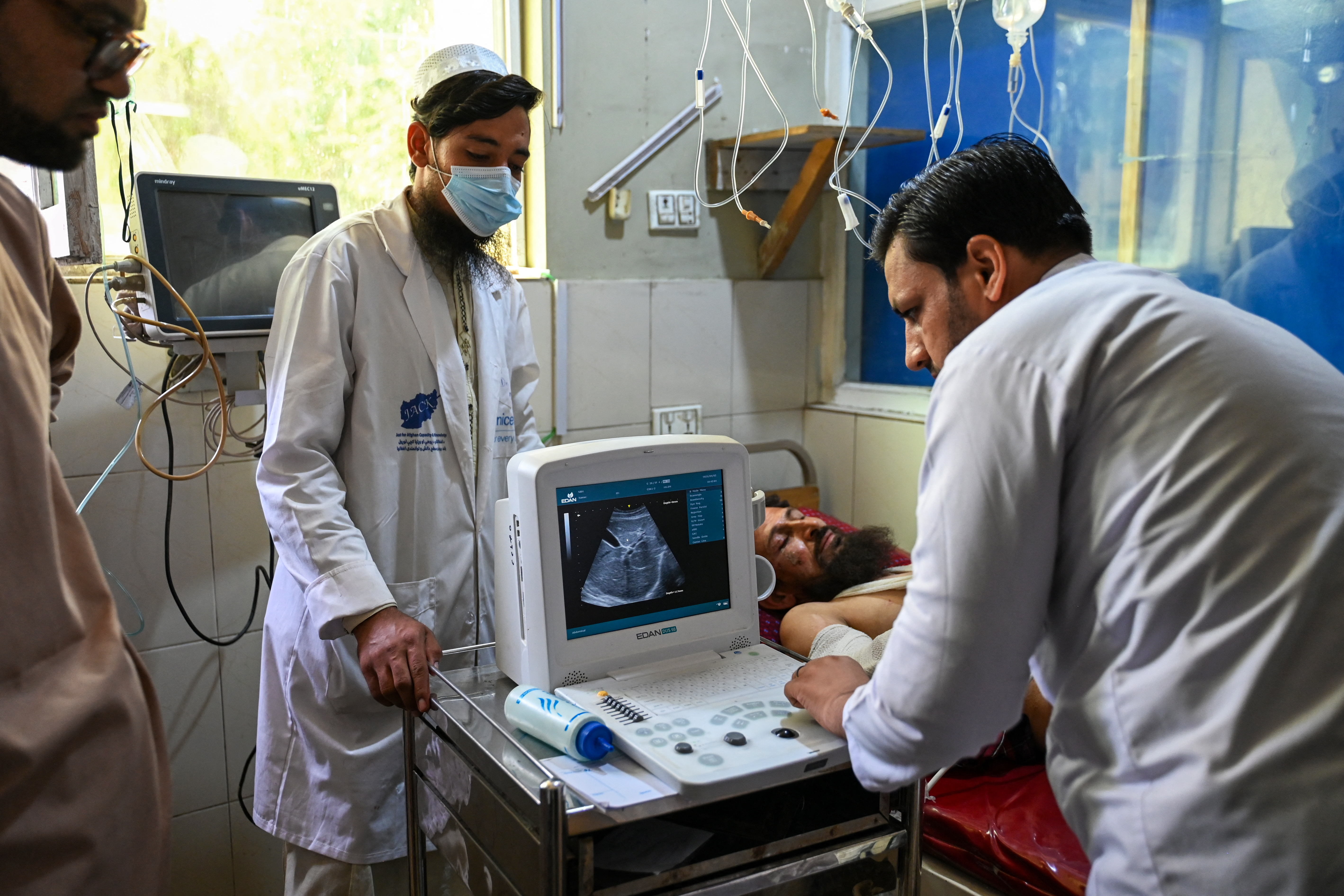
An Afghan man injured during earthquakes receives treatment at a hospital in Jalalabad [AFP] 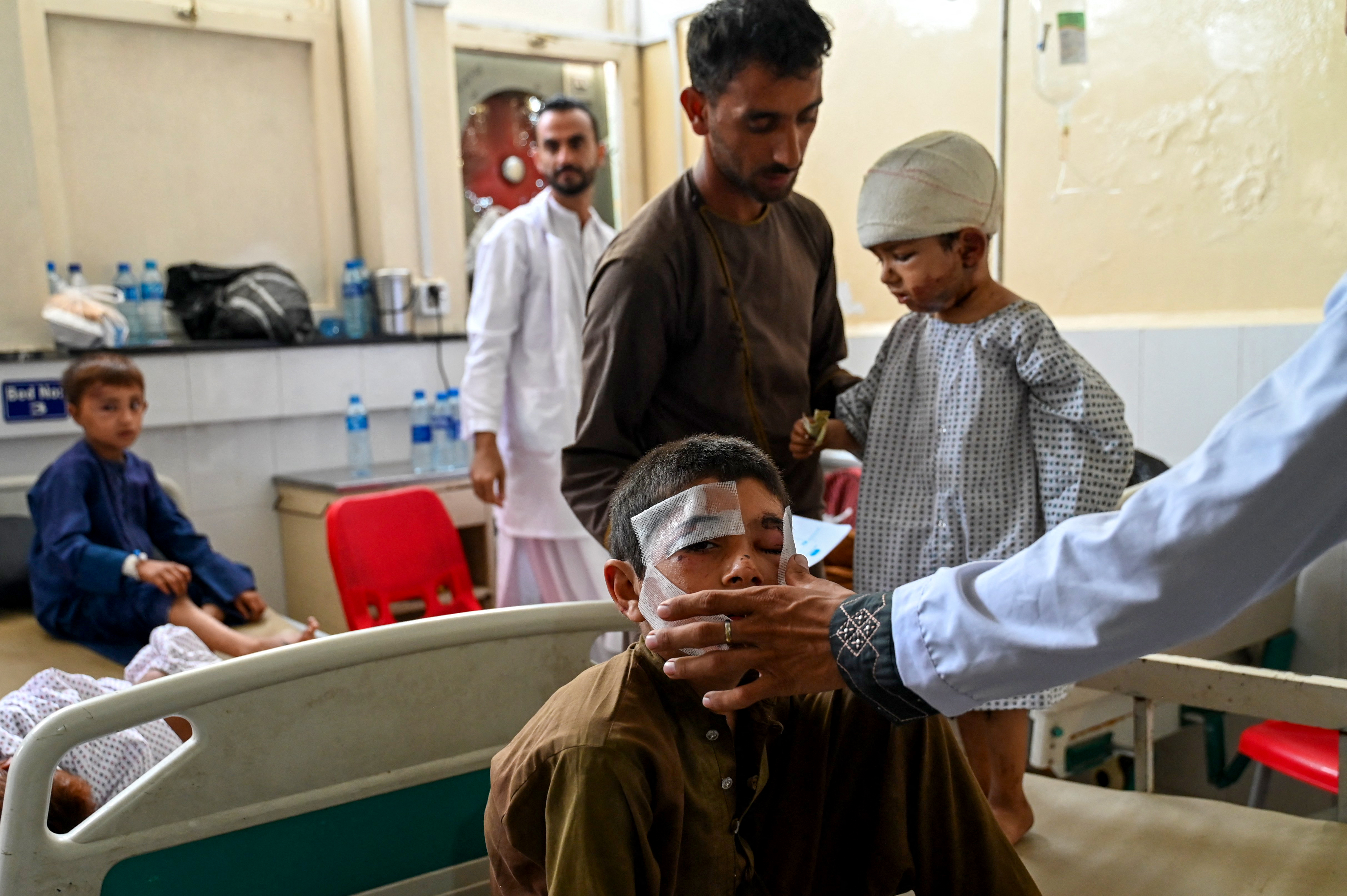
[AFP] 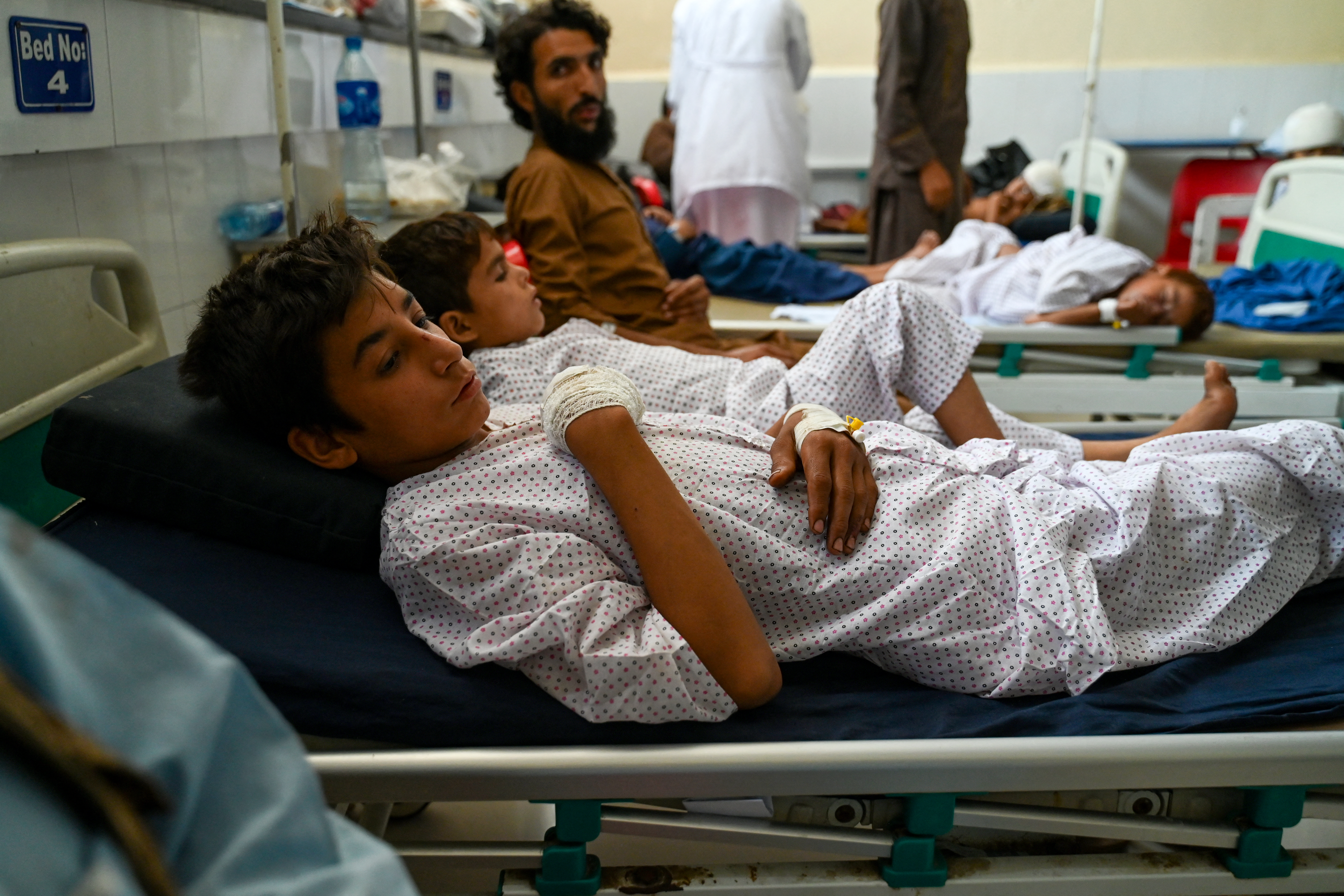
[AFP] 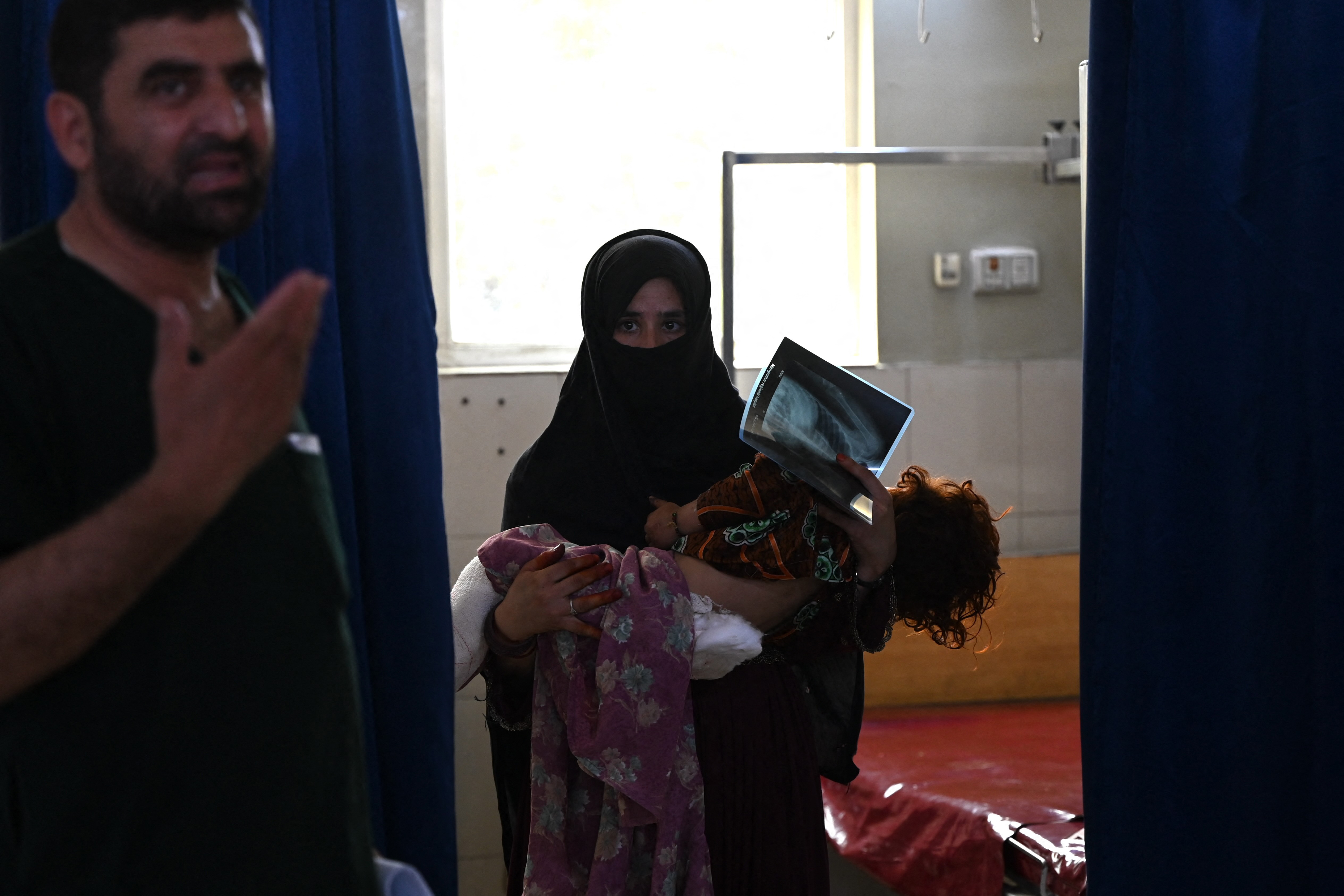
[AFP] - 2 Sep 2025 - 11:15(11:15 GMT)
NATO promises to Afghans ‘cannot continue to be broken’: NRC
Jan Egeland, the secretary-general of the Norwegian Refugee Council, has posted on X that “there is no real funding” from foreign donors to support the relief efforts in Afghanistan.
“The promises to stand by the Afghan girls and boys given by every NATO country cannot continue to be broken,” he wrote.
Donors who turned their backs on Afghanistan in recent years must come back as the earthquake has devastated eastern Afghanistan:
Almost every home is damaged or destroyed. Survivors have lost almost everything.NRC teams are on the ground, wrapping up joint assessments to… pic.twitter.com/cJUIUsb6kP
— Jan Egeland (@NRC_Egeland) September 2, 2025
- 2 Sep 2025 - 11:00(11:00 GMT)
UN says Afghan quake could affect ‘hundreds of thousands’
Indrika Ratwatte, the UN humanitarian coordinator in Afghanistan, says the earthquake that has killed more than 1,100 people could impact “hundreds of thousands”, as he warned of an “exponential” rise in casualties.
“We think potentially the impacted individuals would go up to almost into the hundreds of thousands,” Ratwatte told reporters in Geneva, speaking from Kabul.
Ratwatte said homes in the affected region were largely “mud and wooden roof structures, so when the walls collapse, the roof is what basically for the individuals kills them or suffocates them.
“It’s a low [population] density, but since this happened in the night, everybody was sleeping so I think [the casualty figure] is going to be much higher.”
Ratwatte urged countries to show solidarity with the people of Afghanistan “facing multiple crises, multiple shocks”. He lamented that an appeal for $2.8bn to provide desperately needed aid to Afghans this year was so far only 28-percent funded.
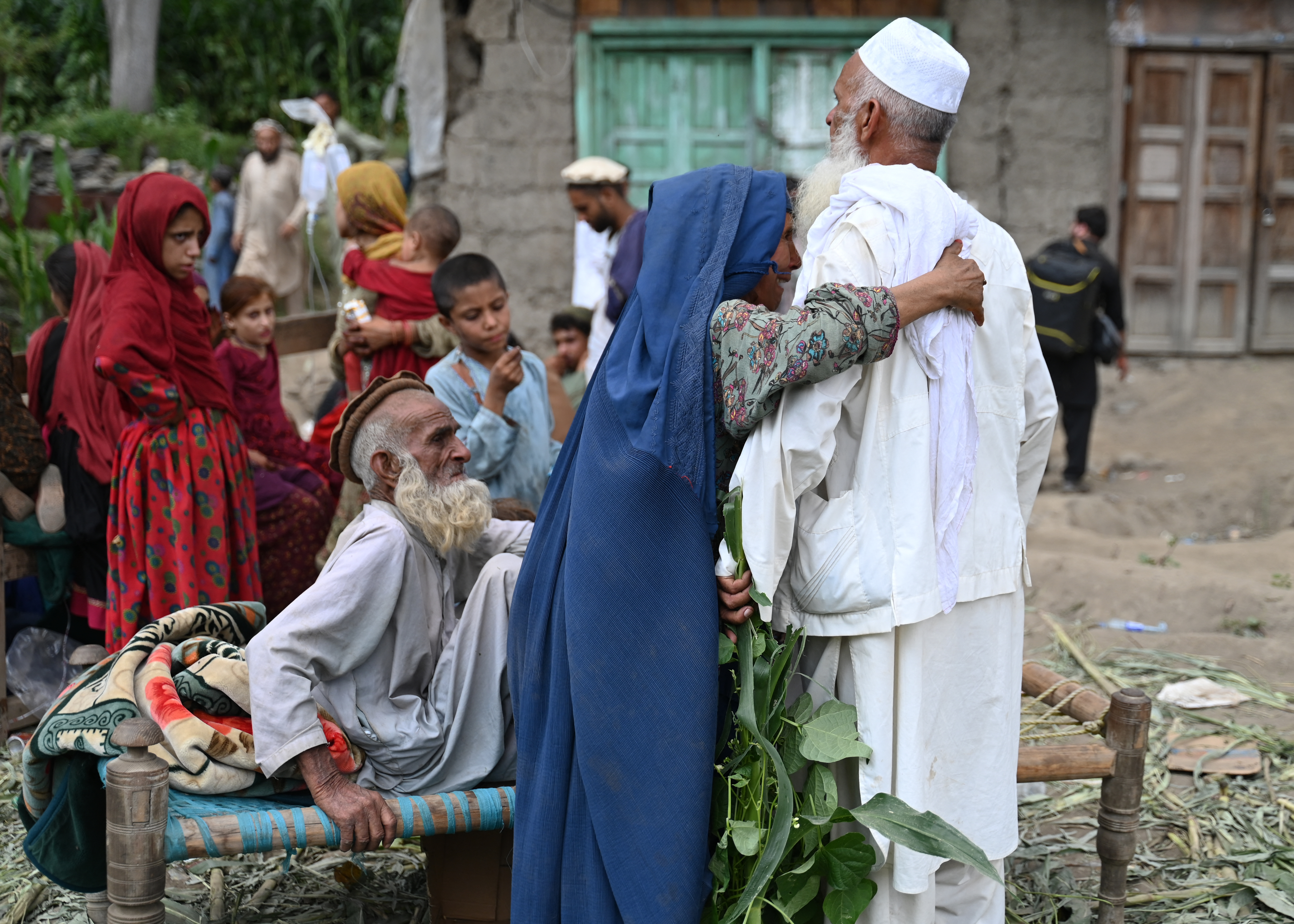
An Afghan woman hugs a man outside a damaged house in Mazar Dara village of Nurgal, a district of Kunar Province in eastern Afghanistan, September 1, 2025 [AFP] - 2 Sep 2025 - 10:45(10:45 GMT)
Infographics: Deadliest earthquakes in recent history
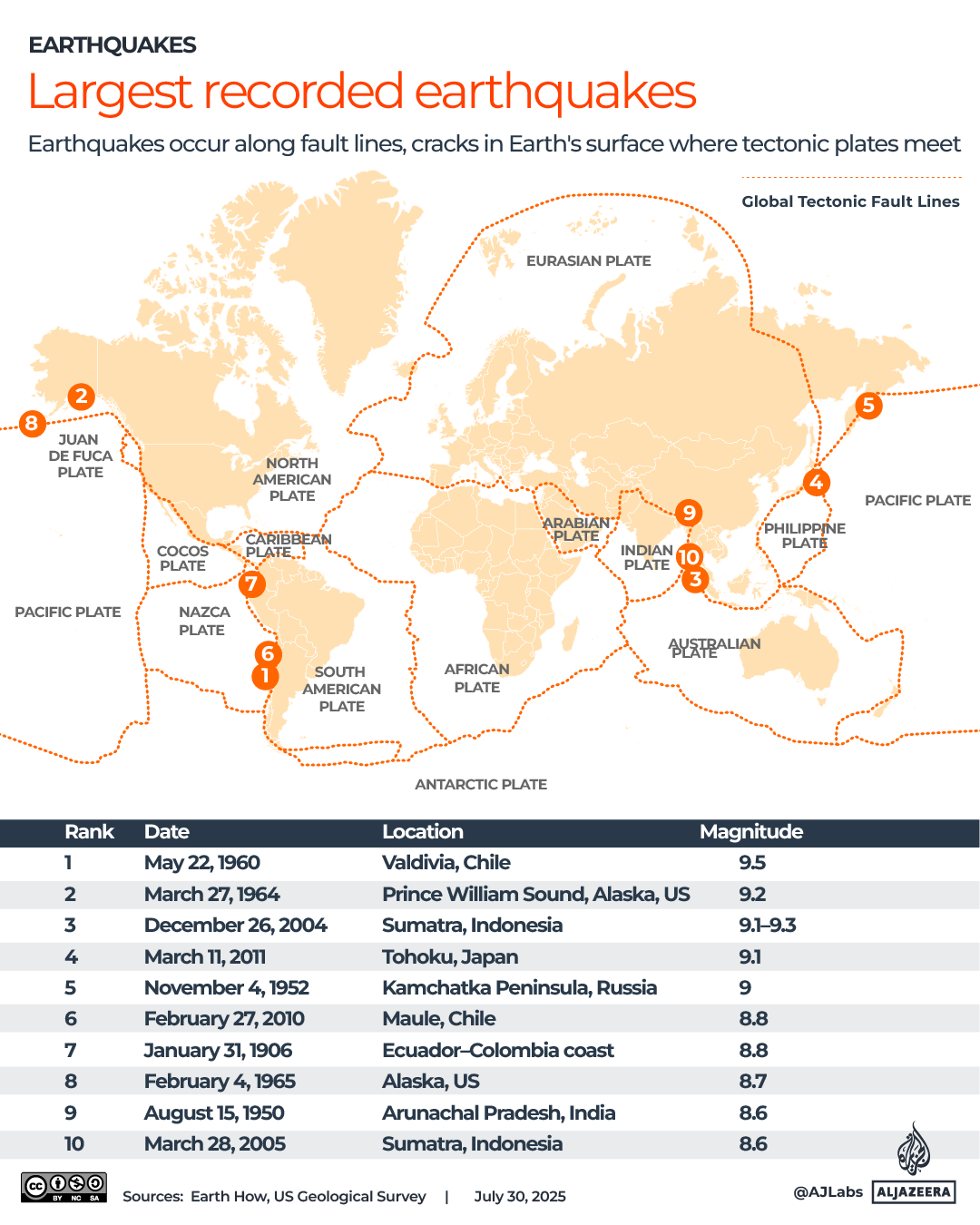
[Al Jazeera] 
[Al Jazeera] 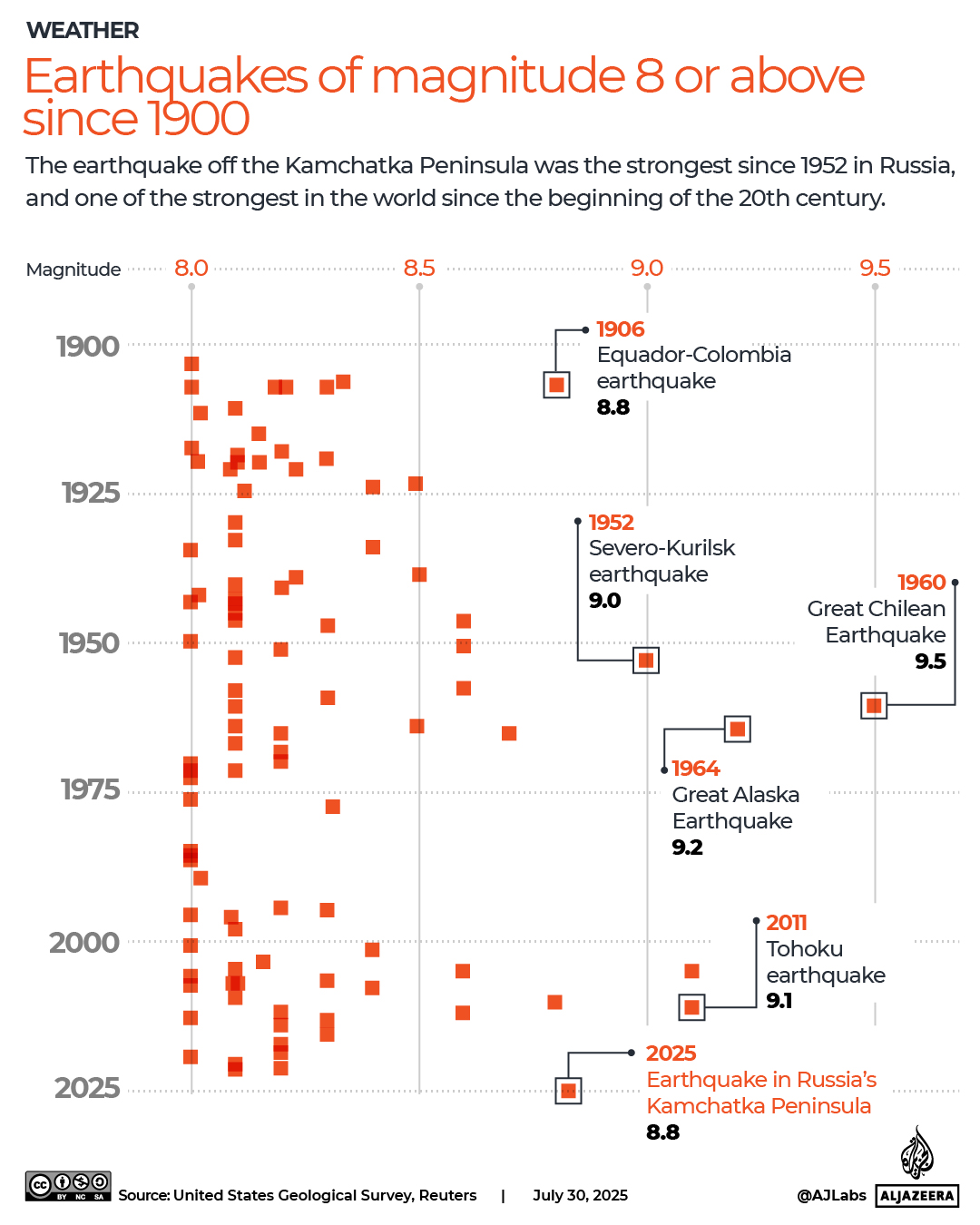
[Al Jazeera] - 2 Sep 2025 - 10:31(10:31 GMT)
Death toll rises to more than 1,400
Taliban government spokesman Zabihullah Mujahid says at least 1,411 people have been killed in Kunar, the province hardest hit by the magnitude 6 earthquake.
In a post on X, he said at least 3,124 people were injured while more than 5,400 houses were destroyed.
- 2 Sep 2025 - 10:30(10:30 GMT)

Where do most of Afghanistan’s earthquakes occur?
Afghanistan is situated in one of the most active seismic zones on Earth, with the Hindu Kush mountain range being a hotspot for both shallow and deep earthquakes.
This area is highly active due to the tectonic collision between the Indian Plate and the Eurasian Plate.
This immense pressure crumples and fractures the crust, while in the Hindu Kush it also drives parts of the lithosphere to sink steeply into the mantle.
As a result, the Pamir-Hindu Kush region of northern Afghanistan witnesses intense earthquakes, reaching depths of up to 200km (124 miles) – a rare phenomenon globally.
In contrast, along the Sulaiman Range (western Pakistan and southeastern Afghanistan) and near the Main Pamir Thrust, earthquakes are typically shallow and destructive, striking closer to the surface where they cause the most damage.
Read more here.
- 2 Sep 2025 - 10:15(10:15 GMT)
‘No help here for us’: Survivor in Kunar province
Ghaziabad, a village in Kunar province, was almost destroyed by the earthquake on Sunday night.
Abdul Latif, 50, told Al Jazeera that his son, wife and mother died after his house collapsed on top of them.
Two houses belonging to his relatives nearby also collapsed, he said. There were 11 people inside one, and 13 inside the other. None of them escaped, and he said he believes they are dead – but that there is no way to recover bodies.
“We have just been trying to find any help to recover the dead from the rubble. It is cold, and there is nothing to eat or any place to find shelter; it is just a very desperate situation,” he added.
Another man from the village, who identified himself as Rabbani, said he lost seven members of his family, including his parents, four children and his wife.
“There are still people under the rubble, but we have no means to remove the debris to try and recover the missing. It has been more than 24 hours, but there is no help here for us,” the 40-year-old said.
Advertisement - 2 Sep 2025 - 10:00(10:00 GMT)
Crisis comes amid improving Pakistan-Afghanistan relations
Kunar and Nangarhar – the provinces worst affected by the earthquake – both border Pakistan.
And in recent years, Islamabad has often accused Afghanistan’s rulers of allowing anti-Pakistan armed groups shelter in these border regions – a charge the Taliban have rejected. The Tehreek-e-Taliban Pakistan (TTP) group, in particular, has carried out numerous deadly attacks on Pakistani soil in recent years.
In recent weeks, Pakistan and Afghanistan have tried to mend fences, in efforts brokered by China, which views Islamabad and the Taliban as allies. On Monday, Pakistani Prime Minister Shehbaz Sharif expressed his “heartfelt condolences” to the families of those killed in the earthquake, adding that his country stood in solidarity with Afghan citizens.
Still, the relationship remains tense: Just last week, Afghan officials accused Pakistan of launching drone attacks in Nangarhar and Khost provinces.
- 2 Sep 2025 - 09:45(09:45 GMT)
Will Pakistan put off latest drive to expel Afghan refugees?
As the provinces of Kunar and Nangarhar grapple with the aftermath of the devastating earthquake, another major concern for the Afghan government is the impending arrival of hundreds of thousands of Afghan refugees from Pakistan.
The Pakistani government had set a deadline of August 31 for Afghan nationals living in the country for the past many decades, even those possessing documents like United Nations Proof of Residence (PoR) cards, as well as the Pakistan government-given Afghan Citizenship Card (ACC).
The repatriation drive to expel foreign nationals has been ongoing since November 2023, and so far, Pakistan has sent almost 900,000 people back to Afghanistan in multiple phases.
The latest phase was to start from September 1, targeting the more than two million people who hold PoR and ACC registrations.
However, with Pakistan itself facing climate-induced crises and record-breaking floods, the expulsion drive has not begun yet. Pakistani authorities have not said whether they plan to defer the expulsions following the earthquake.
- 2 Sep 2025 - 09:39(09:39 GMT)
Death toll rises to 1,124, Afghan Red Crescent Society says
The death toll in one of the worst earthquakes to hit Afghanistan has risen to 1,124, according to the Afghan Red Crescent Society.
At least 3,251 people have been injured and more than 8,000 houses have been destroyed in the disaster, the group said on X.
The Taliban government has not yet updated its death toll.
Afghanistan earthquake updates: New 5.2 quake hits region as 1,400 killed
Death toll jumps to over 1,400 with thousands more injured, the charity says, as rescue workers search for survivors.
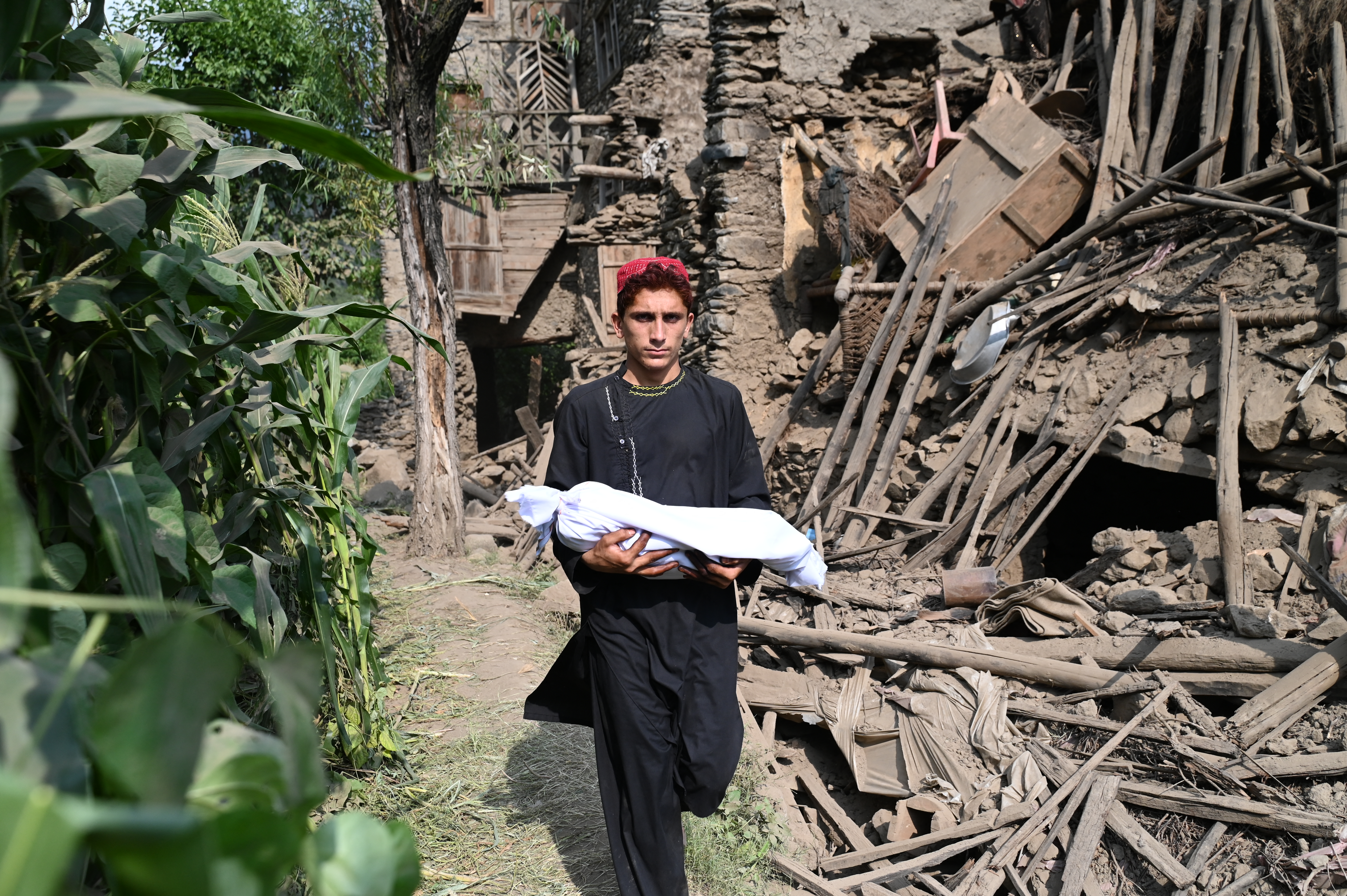
Published On 2 Sep 2025
This live page is closed.
- Northeastern Afghanistan has been struck by a new 5.2 magnitude earthquake, says the US Geological Survey, even as the region recovers from Sunday’s tremor that has left more than 1,400 dead.
- A desperate search for survivors is on after the previous magnitude 6.0 earthquake left more than 3,000 wounded, with most victims in the Kunar province.
- Rescue and aid workers are struggling to reach remote mountainous areas cut off from road and mobile networks.
- Afghanistan is frequently hit by earthquakes, especially in the Hindu Kush mountain range, near the junction of the Eurasian and Indian tectonic plates.