'A Dangerous Game'
Lithuania, a small Baltic state bordering Belarus and Russia's Kaliningrad, is adapting to new tensions between NATO and Moscow.



Various locations, Lithuania - Along the banks of the Nemunas River, flags appear to be a fundamental feature.
On one side, in the sleepy Lithuanian town of Panemune, Lithuanian, Ukrainian, and European Union flags flutter in the wind.
On the other, a Russian flag towers over the Russian city of Sovetsk. On a nearby building is an illuminated decorative Z, a symbol used to show support for the Russian military's full-scale invasion of Ukraine, which began in February 2022.
A solitary fisherman carefully sails under the Queen Louise Bridge, which connects Lithuania with the Kaliningrad region, a sliver of Russian territory sandwiched between two NATO member states. A Lithuanian flag flaps at the rear of his boat.
Vehicles have been banned from crossing the checkpoint on the Lithuanian side since 2022, and dragon’s teeth - concrete pyramidal anti-tank obstacles - have been installed.
The message is clear: tensions are high, and travel across the bridge is not encouraged.
But this was not always the case.
Titas Paulkstelis, a 28-year-old wind turbine technician and resident of Panemune, remembers when people lined up on either side.
“Life here was booming, with people going back and forth,” he said.
It used to be normal to take a day trip to buy products that were cheaper on each respective side, he added.
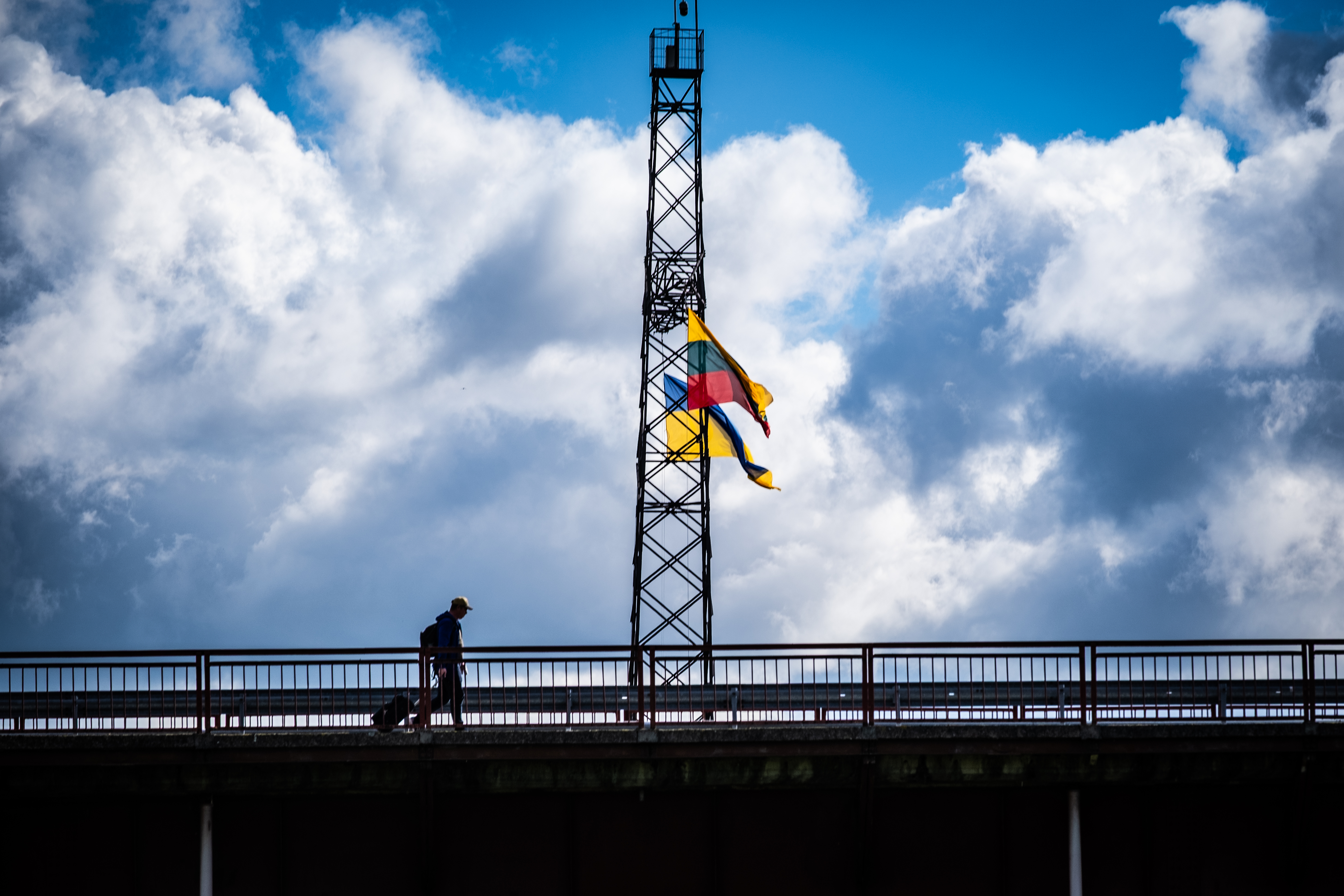
Paulkstelis said traffic across the bridge slowed after Russian-backed separatists invaded eastern Ukraine and Crimea in 2014.
Following Russia’s full-scale onslaught in 2022, the rural town was thrust into the forefront of geopolitical sabre-rattling.
Walking through his lush garden bursting with autumnal colours, Paulkstelis told Al Jazeera about unusual activity over the past year, including a weeks-long jamming of telephone signals, which he suspects may have been a Russian attempt to test Lithuania’s ability to respond.
He appeared amused by most of the activity, calling it “childish”.
An open-air cinema on the Russian side, clearly visible to the residents of Panemune, has been airing a near-constant stream of old Soviet war films since 2022, he said.
However, at times, he feels unsettled.

On several occasions, he has heard rapid gunfire, which he thinks emerges from military exercises in Kaliningrad. One explosion was so powerful that the ground beneath him shook.
In recent weeks, NATO-Russia tensions have exploded, with a number of NATO countries reporting unmanned aerial vehicles (UAVs) entering their airspace.
On October 2 and 3, Germany's Munich Airport closed its runways for several hours after drones were sighted.
Estonia has said Russian MiG-31 fighter jets entered its airspace for 12 minutes.
The implications feel scary for some in Panemune, Paulkstelis said, but there is a sense that there is little they can do given their precarious location.
The town is nestled by Kaliningrad, which is home to nuclear-capable Iskander missile systems and is also close to the Suwalki Gap, a narrow 65-kilometre (40-mile) land corridor between Poland and Lithuania that separates Kaliningrad from Belarus and is seen as NATO’s most vulnerable chokepoint.
“If they’re coming, they will come for here”, he said, referring to the Russian military.
He bit from an apple he had picked from a tree, took a long breath, and added in a calm tone, “But what can we do?”
‘History tells us we have to be aware’


In a village near Lithuania's second-largest city, Kaunas, a classroom has been transformed into an operations room.
Dozens of members of the Lithuanian Riflemen’s Union (LRU), a paramilitary organisation supported by the Lithuanian government, watched a mock hostage situation unfold on a screen.
Transmitted live from a surveillance drone, an assault breacher vehicle could be seen smashing through a brick wall before armed special forces swarm past the rubble and into the building.
A buzz filled the air.
At the same time, thousands of volunteers were engaged in military training activities in cordoned-off villages across Kaunas County, in the centre of the country.
Marius Dubnikovas, a burly volunteer with a background in finance, told Al Jazeera that membership has surged from fewer than 5,000 in 2014 to around 17,000 today.

The LRU were training to prepare for traditional military threats and "hybrid" types of warfare.
He said this could include anything from misinformation campaigns to sabotage and drone incursions.
“Lithuania’s history tells us we have to be aware”, he told Al Jazeera, referring to both Soviet and Nazi occupations in the 21st century.
In August, Lithuania said two Russian military drones launched from Belarus crashed into its territory, prompting the government to pass a bill that handed the armed forces permission to shoot down unmanned drones violating its airspace.
At the LRU military exercises, there was an emphasis on detecting and defending against attacks from UAVS. Mock kamikaze drone strikes were carried out as part of an expansive operation that took place across a small village.
‘A red line’


In late September, US President Donald Trump said that NATO should shoot down drones that entered its airspace.
Polish Foreign Minister Radek Sikorski concurred, stating "Roger that," on X.
Since then, however, there have been multiple drone sightings in Denmark - one of the founding members of NATO - at military sites and airports.
Those incursions have since been linked to an oil tanker, believed to be part of Russia’s shadow fleet lurking in the Baltic Sea, that has been tied to a series of cable-cutting incidents. The Kremlin denies any involvement.
Former Lithuanian Foreign Minister Gabrielius Landsbergis believes that NATO members should follow in the footsteps of Vilnius.
“Any drone that crosses into NATO territory is a dangerous object that should be taken down,” he told Al Jazeera via video link from the US.
As for fighter jet incursions, “there needs to be a wider consensus as to how to establish whether [it] poses a threat. It could be that it is armed, it could be that it is too close to … civilian objects,” he said, noting that responding is essential, as incursions should be considered “a red line”.
It’s a “very dangerous” game that is being played, Landsbergis said, adding that inaction would embolden Russia.
“Half of the alliance thinks that somehow … we're going to be fine, others think that this is existential,” he said.
This sentiment was echoed by Lithuania’s former Prime Minister Ingrida Simonyte, who told Al Jazeera via video link from Vilnius, “There is no big value in NATO countries trying to downplay” such incidents.
“This is what politicians try to do; they don't want to escalate. But what we get is this tango [where] one side is constantly escalating and then the other is constantly trying to de-escalate,” she said.
The cost of deterrence
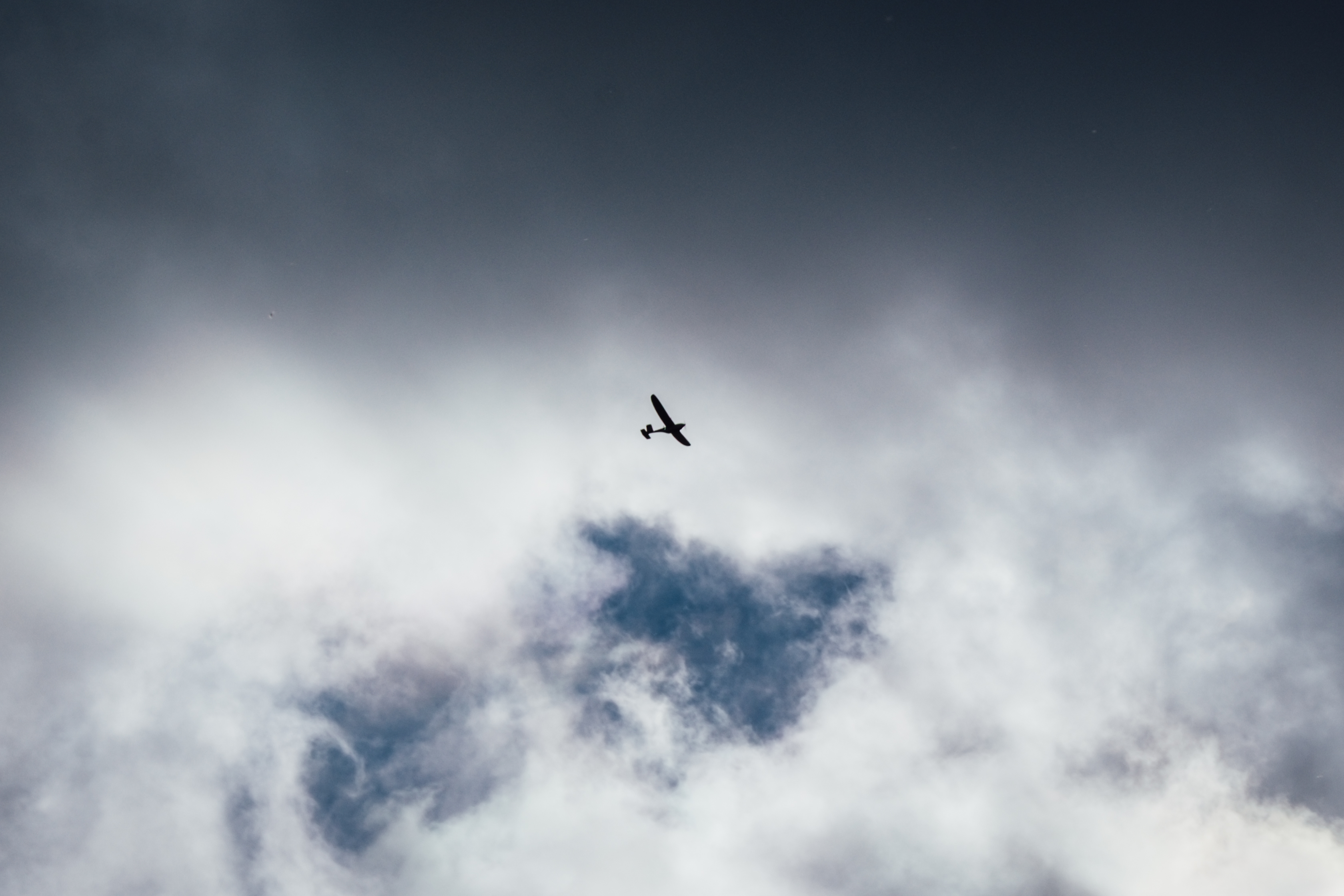

Drone incursions are expensive to defend against, said Simonyte, who has a background in finance.
She said shuttering airports frequently becomes costly and disrupts global travel supply chains, especially if the number and size of airspace violations grow and target economic hubs such as Frankfurt in Germany.
The International Institute for Strategic Studies (IISS) estimated that on September 9 and 10, Russia sent approximately 24 drones made of plywood and Styrofoam into Poland.
Brussels says that Russia "has consistently refused to acknowledge responsibility for such incidents".
Kremlin spokesman Dmitry Peskov has dismissed accusations that Russia is behind the drone incursions as “sweeping” and “unsubstantiated”.
Former Russian President Dmitry Medvedev stated on his Telegram channel that the incident remained a mystery, but downplayed any potential involvement from Moscow.
The IISS estimated that each Russian-made drone costs around $11,800 each; a fraction of what it costs NATO countries to engage its fighters, tanker aircraft, air-to-air missiles and airborne warning and control systems in response.
In September, European Commission chief Ursula von der Leyen called for a so-called "drone wall" which would use a network of sensors and weapons to identify and neutralise UAV incursions.
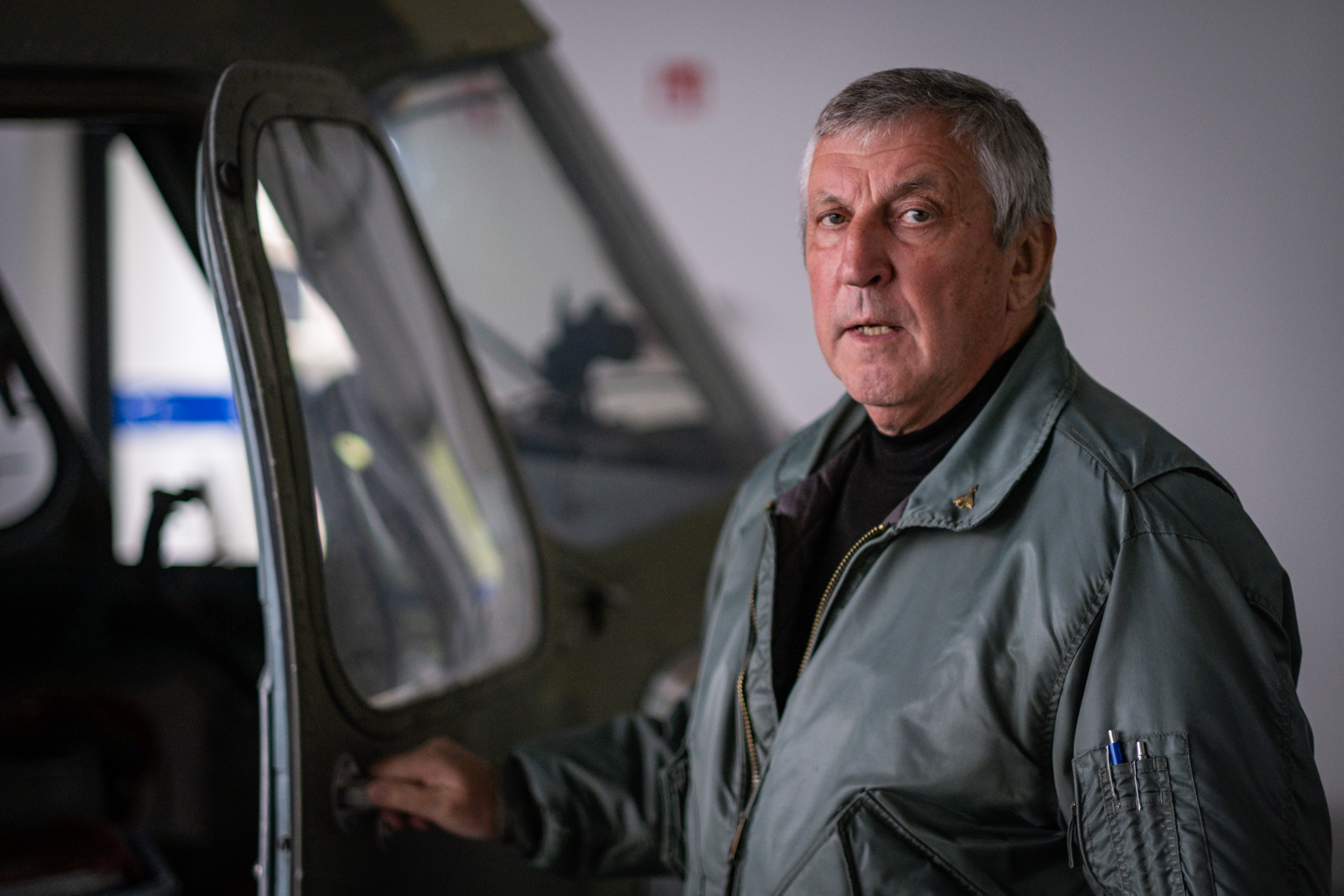
On a windswept airfield on the outskirts of Kaunas, Raubickas Eugenijus, a 69-year-old retired fighter pilot, spent his Sunday tinkering with old aircraft parts.
He told Al Jazeera that drones can also pose a threat to civilian aviation and sow discord in an industry that has to follow rigid safety protocols.
“When we don’t know why a drone is in the sky, what the plan is, it is dangerous. In aviation, we always have to know the objective,” he said.
'I feel safer now'
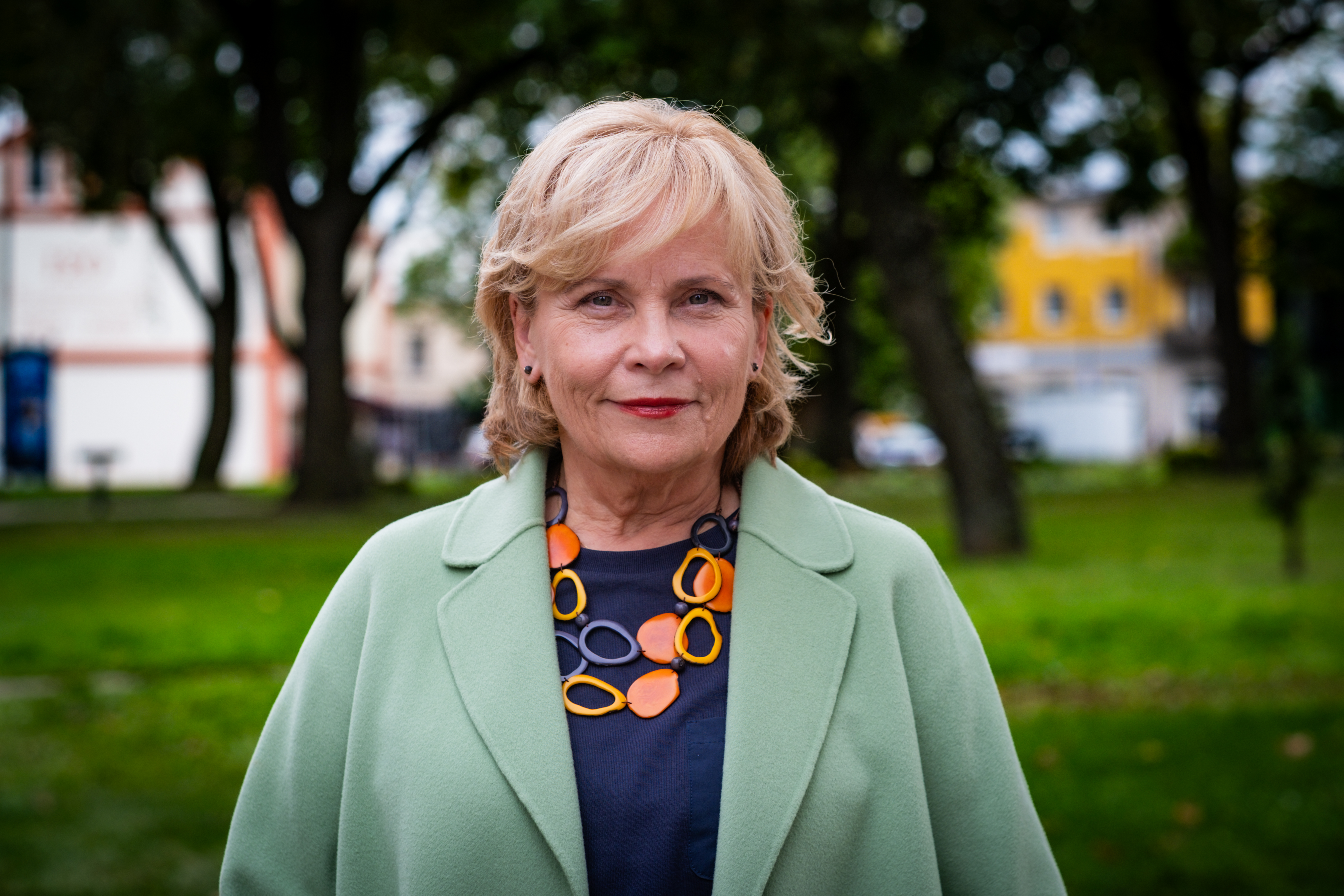

Rasa Jukneviciene, Lithuania’s minister of defence between 2008 and 2012, believes that despite surging tensions, she feels a sense of greater NATO support.
During her time as minister, Russia invaded Georgia and ramped up its military capabilities around the Baltic States and Kaliningrad.
This included the deployment of elite units stationed in Pskov near the border with Estonia and the deployment of missiles, naval assets, and air defence systems to Kaliningrad.
This build-up, along with warnings from the Pentagon and domestic intelligence, suggested that the Baltic States were at risk of occupation in the near future.
When Jukneviciene raised concerns with diplomats from NATO countries, they appeared to her more focused on issues such as the financial crisis and ongoing wars in Iraq and Afghanistan.
Al Jazeera met Jukneviciene in an office in Panevezys, Lithuania’s fifth-largest city, where she recalled meeting a top French minister who told her, “The Soviet Union is gone, and you, Madame, have phantom pains”.
“Now we are not ready enough,” she told Al Jazeera, “but we are much more ready; that's why I feel much safer now than at that time.”