Could Trump's $50m reward succeed in toppling Nicolas Maduro?
This year, Donald Trump doubled the US government's bounty for information leading to the Venezuelan president's arrest. Will his gambit work?


Maria, a former Venezuelan prosecutor living in Houston, Texas, won’t use the word "happy".
But in August, when she saw that the United States had doubled the reward for information leading to the arrest of Venezuelan President Nicolas Maduro, she said she felt “validated".
The reward now sits at $50m, one of the highest bounties ever offered by the US government.
To Maria, the bounty is a path to toppling a government steeped in human rights abuses, including arbitrary detention and torture. She fled Venezuela in 2017 and spoke under a pseudonym for fear of reprisals.
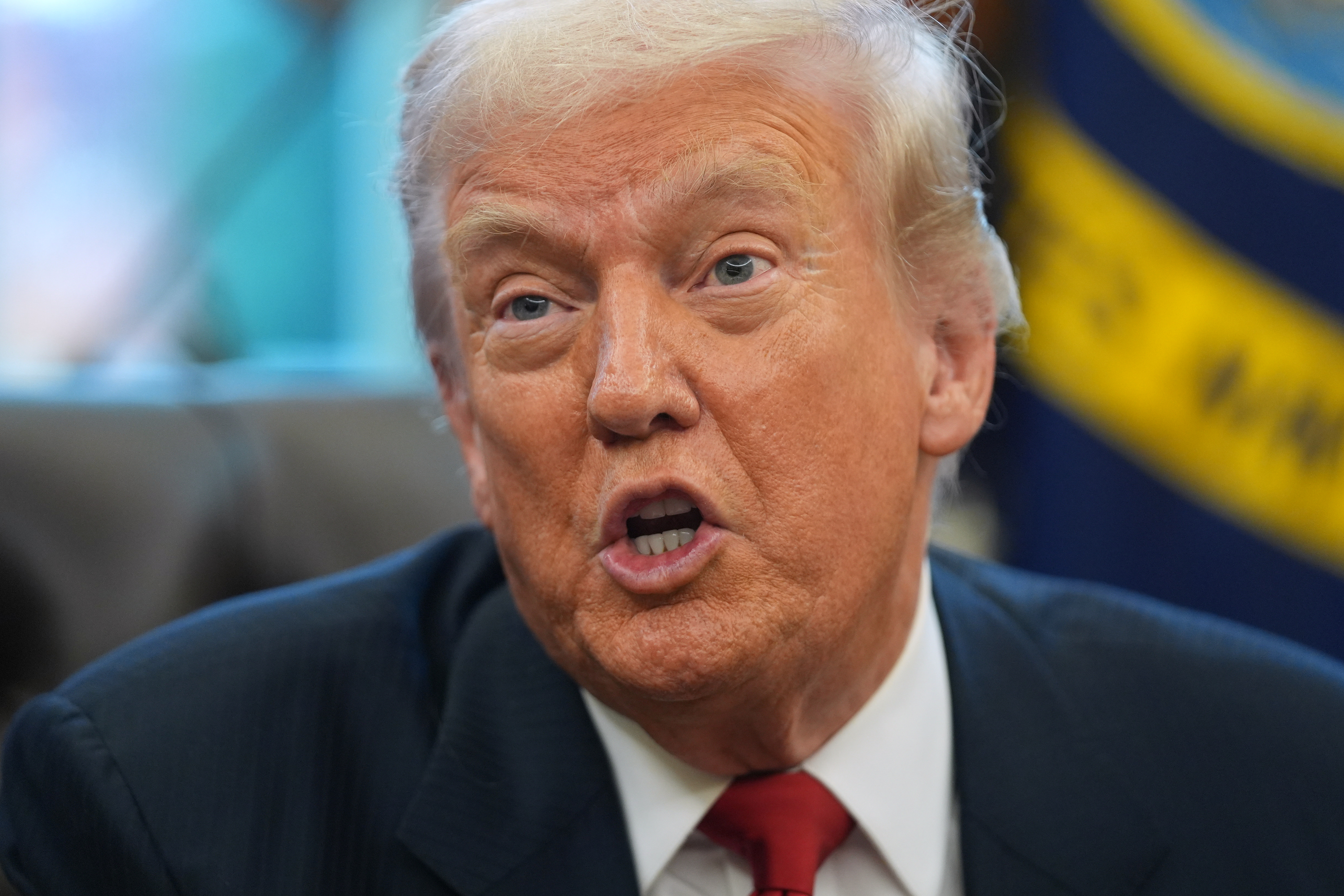
But experts warn that US President Donald Trump's strategy of dangling million-dollar rewards for Maduro's capture could backfire, leading to further instability in Venezuela.
“There’s just an assumption that, once we get rid of the bad guy, things will be good,” said Alex Downes, a political science professor at George Washington University.
A tidy resolution, Downes warned, isn't likely. "Even when regime change is popular, that often doesn't happen because there are all kinds of underlying problems in the country. And the big danger in Venezuela is that the thing just falls apart."


A bipartisan tactic
The bounty is one of the latest flashpoints in a longstanding feud between Trump and Maduro.
Since Trump's first term as president, he has mused about regime change in Venezuela.
In 2017, his administration sanctioned Maduro for "undermining democracy in Venezuela". Then, in 2019, Trump made the decision to recognise opposition leader Juan Guaido's claim to the presidency over Maduro's.
All the while, media reports indicated Trump was privately weighing a "military option" to remove Maduro from power.
In the final year of his first term, Trump once again upped the ante. He announced a bounty of $15m for Maduro's arrest, plus smaller multimillion-dollar rewards for Venezuela's minister of defence and its chief Supreme Court justice.
Offering a cash reward for Maduro's downfall has been a bipartisan US policy ever since.
Under the administration of President Joe Biden, the bounty grew to $25m. Then, when Trump returned to office for a second term in January, a second increase brought the reward to its current historic height.
"Maduro will not escape justice, and he will be held accountable for his despicable crimes," US Attorney General Pam Bondi said in an August statement.
Meanwhile, the US has escalated its military presence in the Caribbean region and bombed boats accused of smuggling drugs from Venezuela.
Tensions between the two countries are at their highest in years.


'Zero successes'
The bounty against Maduro is not the first time the US has offered money for help in apprehending foreign adversaries.
But Downes, the political science professor, questioned whether rewards are an effective tool for promoting government change abroad.
He ran through a list of prominent bounties. In December 1989, for instance, the US put a $1m bounty on the head of Manuel Noriega, a military dictator who ruled Panama for much of that decade.
Hundreds of tips flooded into the Pentagon. But it was only when the US invaded Panama that same month that Noriega was detained.
Downes also pointed to 2003, when the US offered a $25m bounty for deposed Iraqi President Saddam Hussein. With his government in shambles, Hussein had gone into hiding.
But it was an interrogation, not the reward, that ultimately led to Hussein's arrest and execution.
Downes does acknowledge that Hussein's sons were tracked down with the help of a $15m reward — but that was well after the US invasion of Iraq began.
Unlike in Maduro's case, Downes pointed out that most of those bounties came after the leaders in question were removed from power. They also happened in tandem with military action.
Downes therefore questions whether the US rewards have notched any victories on their own.
“Zero successes,” Downes said. “Zero instances of a reward or bounty leading to regime change. And some of them were put up after the regime change had already happened.”

Risk of instability
Downes also argued that the sudden demise of Venezuela's government could leave a power vacuum that may yield more chaos for the country.
Already, Venezuela faces political repression and an economic crisis marked by skyrocketing inflation and extreme poverty. In recent years, the country has experienced shortages of food, medicine and other vital supplies.
"You might get a new government, but it’s not going to be able to control its territory," Downes said. "Who’s going to have to help do that? The United States.”
Nicholas Grossman, a political science professor at the University of Illinois, also warned that deposing Maduro could have unintended consequences for the Trump administration.
Trump has blamed Venezuela for flooding the US with migrants and illicit drugs. But arresting Maduro could create an opening for an increase in both, according to Grossman.
“If you destabilise a government, what that is most likely to do is create a lot more migration as people flee the chaos and become refugees or internally displaced,” he said.
“And that potentially destabilises these neighbouring countries, too, which could also create more migration and destabilisation and open up spots for nonstate actors like narcotics traffickers, terrorist groups and insurgent groups.”
Al Jazeera contacted the White House to ask about the bounty policy and what the US plans would be for Maduro's possible fall.
In a statement, a spokesperson replied, "The President will continue to use every element of American power to stop drugs from flooding into our country."
Critics, however, warn that Trump's bounty might play into Maduro's hands.
The Venezuelan government has long accused the US of "imperialism" in Latin America and has pointed to the reward as proof.
Its foreign minister, Yvan Gil, recently described August's historic bounty amount as a "crude political propaganda operation".


A $50m temptation
Maduro's officials have also used attempts to collect the bounty as evidence of US interference in domestic affairs.
In 2020, for instance, a former Green Beret named Jordan Goudreau organised a band of Venezuelan military defectors and US veterans to infiltrate Venezuela and spark an uprising.
The operation took place just weeks after Trump's bounty was first announced, and sources close to Goudreau, including filmmaker Jen Gatien, have cited the money as a factor.
But Goudreau's efforts ended in disaster. At least six people were killed, and dozens were arrested.
Venezuelan authorities have since paraded the prisoners on television, framing the episode as a foreign-backed mercenary plot.
Most recently, an agent with the US Department of Homeland Security tried and failed to recruit a pilot who worked for Maduro named Bitner Villegas.
According to media reports, the agent sent Villegas a news release about the $50m bounty in an apparent attempt to entice the pilot to deliver Maduro to US authorities.
But that effort likewise failed. Instead, Villegas appeared on a Venezuelan state TV show with Interior Minister Diosdado Cabello after the recruitment attempt was revealed.
Villegas is a “kick-a** patriot", Cabello said. Villegas, in full military dress, raised his fist as the show's audience applauded.
Still, the opposition to Maduro's government has continued to use Trump's bounty as a rallying cry.
Venezuelan politicians exiled abroad have erected banners in the style of "wanted" posters, advertising the bounty in cities like Quito, Ecuador, and along the Colombian border.
And last month, as part of his bid for re-election, former Bolivian President Jorge Quiroga told CNN that he would capture Maduro and collect the $50m if the Venezuelan leader ever were to visit his country.


'Hungry for justice'
Members of the Venezuelan diaspora community in the US have likewise applauded the bounty as sending a strong signal against the Maduro administration.
Aminta G, a Venezuelan business owner who is a permanent resident in the US, has lived in Texas for decades but yearns to go back to her home country.
She asked to use a pseudonym, for fear her words could put her family in Venezuela in danger.
"I'm hungry for justice," Aminta said. "There's been too much suffering for too long."
The bounty, she explained, helps to legitimise the opposition's push against Maduro's government.
"By having that $50m reward on this man's head, it's confirmation that we are not dealing with a bad president," she said. "He's a criminal."
Maria, meanwhile, told Al Jazeera she has experienced Maduro's campaign of oppression firsthand.
Maduro's government, she said, fired her from her post as prosecutor. She never received a formal explanation for her dismissal, but to Maria, the reasons were clear.
"The true reason I was dismissed was because I refused to participate in corruption, the fabrication of criminal cases and the prosecution of innocent people," she said.
"Inside the justice system controlled by the regime, it was common for prosecutors and judges to be pressured into accusing people without evidence. I refused to do it."
She has since sought asylum in the US, where her application is pending.
Her stay in the US, however, is precarious. Currently, Maria is staying legally in the US under a designation called Temporary Protected Status (TPS), a form of short-term protection for people whose home countries are deemed unsafe.
She has nightmares, though, about being deported to Venezuela, where she fears torture could await her. The Trump administration has sought to eliminate TPS for many recipients, including Venezuelans, as part of a crackdown on immigration.
Still, she backs Trump's bounty campaign. Even if the reward alone is not the solution to all of Venezuela's problems, Maria said it nevertheless tells her something she needs to believe: that the man responsible for her suffering is viewed as a criminal by others, too.
It’s enough to make her use a word she’s cautious about: “hope”.
“Our hope is real,” she said. “But it is not naive.”